What Do Monk Parakeets Eat? The Right Diet and the Foods You Must Never Give
 Written by the NokMonk team, monk parakeet breeders in ThailandUpdated 12 Sept 2026Read time 13 min
A monk parakeet diet should be 60 to 70% pellets, 20 to 25% vegetables, a little fruit and only a few sunflower seeds. Plus the fruits parrots must never eat.
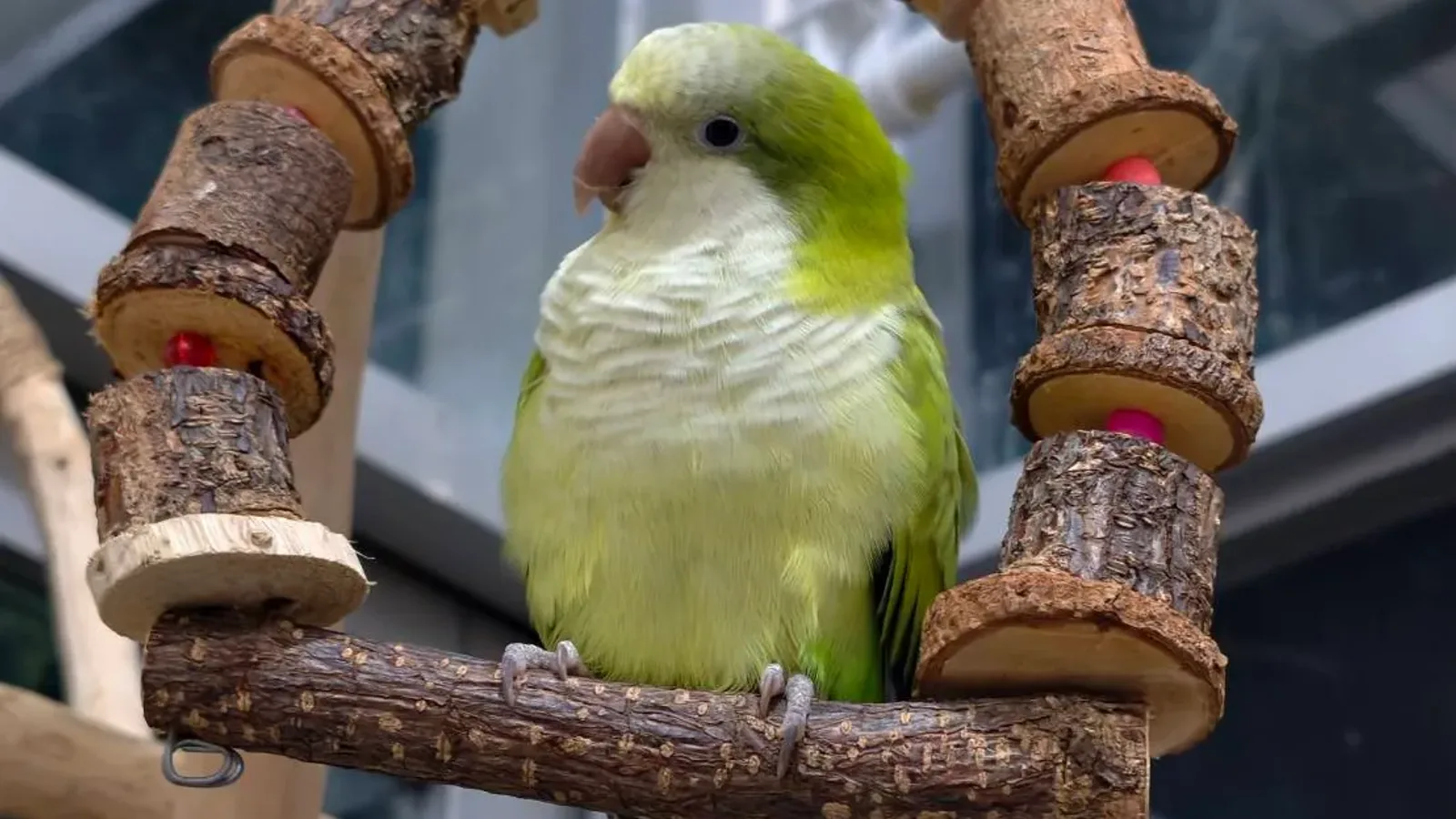
If you ask what a monk parakeet eats, the shortest honest answer is this: pellets as the base, fresh vegetables every day, a little fruit, and sunflower seeds only as a reward. I have kept and bred monk parakeets for many years, and I have seen far more birds fall ill from their food than from any infection. Almost every case traces back to the same misunderstanding, the idea that parrots are supposed to live on seed.
This article is a plain account of how I feed the birds in my own home. It covers how a good diet is put together, the proportions I use, what is safe, what is strictly off limits, and the problems new owners run into when they switch foods. By the end you should be able to fill a food bowl without guessing.
What monk parakeets can eat
Monk parakeets can eat formulated parrot pellets, fresh vegetables, fruit, cooked whole grains and legumes, and a small amount of seed. The key point is that pellets, not seed, should be the staple.
In the wild the monk parakeet, known to many English speakers as the Quaker parrot, is a very varied forager. It eats grass seeds, fruit, young shoots, flowers and the occasional insect. Wild birds fly all day searching for food and burn a great deal of energy, so high fat seed is not a problem for them.
A monk parakeet in a cage flies a few metres at most. If it is fed only sunflower seed and paddy rice, which some bird markets still do, it becomes overweight, its liver stores fat, and it usually dies well before its time. That is a shame, because a well kept monk parakeet can live 20 years or more.
Here are the food groups a monk parakeet can safely eat:
- Formulated pellets made for small to medium parrots. This is the base of every meal.
- Fresh vegetables such as kale, broccoli, carrot, pumpkin, sweet pepper, long beans and water spinach.
- Fruit such as papaya, guava, apple, banana, mango and watermelon, offered in small amounts.
- Cooked grains and legumes such as brown rice, quinoa, millet, mung beans, red beans and chickpeas, boiled until soft.
- Seeds and nuts such as sunflower, safflower, millet spray and almond, strictly as treats.
- Extra protein in the form of hard boiled egg, 1 to 2 times a week, especially during moulting or breeding.
Daily proportions for a monk parakeet
The split I use for my own birds, and recommend to everyone who takes a bird home from me, is 60 to 70% pellets, 20 to 25% fresh vegetables, 5 to 10% fruit, and no more than 5% seeds and nuts combined. These are rough proportions of the total food eaten across a day.
An adult monk parakeet weighs roughly 90 to 130 grams and eats about 15 to 25 grams of dry food a day. You do not need to weigh the food precisely every day, but you should weigh the bird once a week, in the morning before it eats. If the weight moves up or down by more than 10% within a few weeks, adjust the diet straight away.
| Food group | Share of daily diet | Approximate amount (1 adult bird) | Frequency |
|---|---|---|---|
| Pellets | 60 to 70% | 12 to 18 grams, or about 1.5 to 2 tablespoons | Daily, available all day |
| Fresh vegetables | 20 to 25% | 1 to 2 heaped tablespoons, finely chopped | Every morning, remove within 3 to 4 hours |
| Fruit | 5 to 10% | 1 to 2 teaspoons | Every other day, or daily in small amounts |
| Cooked grains and legumes | Counted with vegetables | 1 teaspoon | 2 to 3 times a week |
| Sunflower seeds and nuts | No more than 5% | 3 to 5 sunflower seeds, or half an almond | Training rewards only |
| Hard boiled egg | Supplement | About 1/8 of an egg | 1 to 2 times a week |
| Clean water | Unlimited | Bowl always full | Replace 1 to 2 times a day |
A common mistake is worrying that a vegetable heavy diet will leave the bird short of nutrients. The opposite is true. Vegetables are the main source of vitamin A, the nutrient pet parrots most often lack, while energy and protein already come from the pellets. I once had a monk parakeet so low in vitamin A that it sneezed constantly and had watery eyes. After switching to daily kale and carrot it recovered within 1 to 2 months.
How to choose pellets for a monk parakeet
Choose a pellet formulated for small to medium parrots, with pieces roughly the size of a mung bean up to a corn kernel, and go for an undyed formula if you can. Any brand works as long as the bird accepts it and you can buy it consistently in Thailand.
Brightly coloured pellets are not dangerous, but they make droppings hard to read. When the droppings turn red or dark green you cannot tell whether it is dye or illness. Natural coloured pellets show abnormalities much more clearly. Imported pellets currently sell for around 400 to 1,000 THB per kilogram at Thai market prices. One monk parakeet eats roughly 500 grams a month, so the cost comes to a few hundred baht monthly, many times cheaper than treating a damaged liver.
Check the expiry date on the bag, and look for grains and ground soy as the main ingredients rather than ground sunflower listed first. Buy small bags that will be finished within 1 to 2 months, because the hot and humid climate here makes pellets go mouldy and rancid very quickly. Once opened, store them in a sealed container out of direct sunlight.
If your bird has only ever eaten seed, converting to pellets takes time. My method is to mix pellets into the familiar seed, starting at 25% pellets and increasing every 5 to 7 days until the bowl is all pellets after about 1 month. Some birds prefer pellets soaked in warm water until soft, and coarsely crushing them over fruit also helps. Weigh the bird every 2 to 3 days during the switch and never let it go hungry to the point of losing more than 10% of its weight.

Vegetables monk parakeets can eat daily, and ones to avoid
Vegetables a monk parakeet can eat every day are the dark leafy greens and orange vegetables, such as kale, broccoli, carrot, pumpkin and sweet pepper. Vegetables to avoid are onion, garlic, spring onion, iceberg lettuce and raw potato.
The range of local vegetables that are safe and easy to find is wider than most people expect. Kale is the one I offer most because it is high in calcium and birds love chewing the stems. Chinese water spinach is fine, leaves and stalks. Long beans cut into sections make a chew toy the bird can hold for ages. Raw carrot and pumpkin can be grated or cut into sticks. Fresh corn is fine but keep it limited because of the starch. Fresh bird's eye chillies are safe, the bird feels no heat at all, and they are an excellent vitamin source.
Spinach and ivy gourd leaves are fine but not every day, since they contain compounds that bind calcium. Chinese cabbage and cucumber are harmless but carry almost no nutrition. Treat them as toys, not as the vegetable serving.
Wash every vegetable properly. I soak them in water with baking soda or vinegar for 10 to 15 minutes, then rinse twice in plain water. Pesticide residue on fresh market produce is not something you can be careless about with a bird weighing just 100 grams. Vegetables put in the cage in the morning should be removed before midday, because the heat makes them spoil fast and attract flies.
Fruits parrots must never eat, and fruits that are safe for monk parakeets
The one fruit that is completely forbidden is avocado. Apple seeds, pear seeds, and the stones of cherries, plums, peaches and apricots must be removed every single time. Most other fruits are fine in small amounts.
Avocado contains a compound toxic to a bird's heart, in the flesh, the skin and the stone. A small piece can kill within hours. Never leave it anywhere near the bird, even while you are eating it yourself. Apple seeds and the stones of cherry family fruits contain small amounts of cyanide compounds, and a small bird cracking open just a few seeds can come to harm.
| Fruit | Safe or not | Notes |
|---|---|---|
| Avocado | Never | Toxic to the heart, flesh, skin and stone alike |
| Apple, pear | Safe | Remove every seed |
| Cherry, plum, peach, apricot | Flesh only | Stones are toxic, never let the bird chew them |
| Ripe papaya | Safe, often | High in vitamin A, seeds are edible |
| Guava | Safe, often | Low sugar, firm flesh, ideal as a regular fruit |
| Banana, ripe mango | Safe | High sugar, one small piece at a time |
| Watermelon, melon | Safe | Very watery, droppings loosen briefly, no cause for alarm |
| Orange, pineapple | Occasionally | High acid, too much causes diarrhoea |
| Grape, longan, lychee | Occasionally | Very high sugar, remove longan and lychee seeds |
| Durian, jackfruit | Avoid | Too much fat and sugar for a bird |
| Dried and candied fruit | Avoid | Concentrated sugar, often contains preservatives |
The fruits I rely on at home are ripe papaya and guava. They are cheap, available all year, and not as sugary as the sweeter fruits. Monk parakeets have a serious sweet tooth. Give banana or mango every day and the bird will pick out the fruit and leave the pellets, ending up overweight and undernourished at the same time.
How many sunflower seeds can a monk parakeet have
A monk parakeet should get no more than 3 to 5 sunflower seeds a day, ideally from your hand as a training reward. Do not put them in the bowl for the bird to help itself. Sunflower is a treat, not a food.
Sunflower seeds are about half fat by weight. The closest human comparison is eating fried food at every meal. Birds get hooked on them, and once there are sunflower seeds in the bowl the bird will flick out the pellets to dig for them first. This is the main reason so many pet monk parakeets here are overweight with liver problems. The Quaker parrot puts on fat more easily than many parrots of similar size, and avian vets and breeders have agreed on that for a long time.
The upside is that sunflower seeds are superb for training. A bird will step up or go back into its cage on its own for a single seed. So I keep sunflower strictly for training sessions, offered in the evening after the bird has spent the day eating pellets and vegetables. If you want some seed in the bowl for the bird to nibble, use millet or safflower instead, since both are lower in fat.
Signs that a bird is eating too much sunflower include weight gain, a chest so rounded you cannot feel the keel bone, dull plumage or an odd yellow tinge, a beak growing unusually fast, and general sluggishness. If you see this, cut the sunflower immediately and book a blood test.

Foods that are strictly forbidden for monk parakeets
Never give avocado, chocolate, coffee, tea, alcohol, onion, garlic, anything high in salt or sugar, or fried food of any kind. This is a hard ban, not a list of things to go easy on.
- Avocado is severely toxic to a bird's heart.
- Chocolate, cocoa, coffee, tea and soft drinks contain caffeine and related compounds that push the heart into an irregular rhythm.
- Onion, garlic, spring onion and shallot destroy red blood cells, raw or cooked.
- Mushrooms include species toxic to the liver. They are hard to tell apart, so not worth the risk.
- Raw and uncooked dried beans contain compounds that damage the digestive system. Always boil them until soft.
- Milk, butter, cheese and ice cream cannot be digested because birds lack the enzyme for lactose, so diarrhoea follows.
- Human food such as fried rice, fried chicken and crisps carries salt, oil and seasonings a bird cannot handle.
- Sweets with artificial sweeteners such as chewing gum are toxic to the liver.
- Tomato leaves and stems, and raw potato contain toxins in the green parts. A little ripe tomato fruit is fine.
The most common problem I see here is not avocado. It is people sharing their own meals. Monk parakeets are very tame and love sitting on your shoulder at dinner. When the bird begs, owners give in and hand over a bit of fried rice or a snack. A small bird's kidneys can cope with very little salt, and done regularly this leads to kidney failure without the owner ever realising why.
If you know your bird has eaten something dangerous, do not wait to see what happens. Get to an avian vet at once. With avocado or chocolate speed matters even more, because in the first 1 to 2 hours there is still something a vet can do.
What to do when a monk parakeet refuses vegetables
Most monk parakeets that refuse vegetables do not dislike them. They simply do not recognise them as food. The fix is to offer them again every day in changing forms and let the bird watch you eating them. Most birds come around within 2 to 4 weeks.
Several tricks have worked with my own birds. Clip leafy greens to the cage bars at eye level so the bird can shred them. Chop vegetables into pellet sized pieces and mix them into the same bowl as the pellets. Grate carrot over a food the bird already likes. Cut vegetables into long strips the bird can grip with its foot. Monk parakeets love destroying things, so a vegetable that can be torn apart is far more tempting than one sitting quietly in a bowl.
Another very effective method is eating vegetables in front of the bird. Sit by the cage and eat kale or carrot as if it were the best thing you have ever tasted. Monk parakeets are flock birds, and whatever a flock member eats must be safe. If you have another bird that already eats vegetables, placing the cages within sight of each other helps a lot.
What you must never do is remove the pellets to force the bird onto vegetables. A bird would rather starve than eat something it does not recognise, and a small bird gets into danger after less than a day without food. Keep pellets as the base at all times and add vegetables gradually. Vegetables thrown away every day are not a failure. They are just a stage the bird goes through while getting used to them.
When hand fed monk parakeet chicks start eating on their own, and what to give them
Hand fed monk parakeet chicks start pecking at food on their own at around 6 to 7 weeks and are usually fully weaned at 8 to 10 weeks. During this period keep pellets, finely chopped vegetables and soft cooked grains available at all times for them to try.
Weaning is the golden window for building good vegetable habits, because a chick has no prejudice against any food yet. Birds raised on vegetables and pellets from the start eat far more readily as adults than birds raised on seed. That is why I put kale, corn and softened pellets in the nursery cage from the moment the chicks can stand.
When you bring a hand fed chick home, ask the breeder which pellet brand and which vegetables it is used to, then keep feeding exactly the same for at least 2 weeks before making any change. Moving house is stressful enough, and changing the food at the same time can make a bird stop eating altogether. At current Thai market prices a hand fed chick in the normal green colour costs 5,000 to 9,000 THB and a blue around 15,000 to 25,000 THB, varying with the season, tameness and genetics. Paying that much and then losing the bird to a feeding problem in the first 2 weeks is something I have watched happen, and it is heartbreaking every time.
A freshly weaned chick should be weighed every morning. A slight drop during weaning is normal, but if the weight keeps falling for 3 days or drops by more than 10%, go back to a supplementary evening hand feed for a while. Never force weaning to a fixed schedule, because every bird moves at its own pace.
Feeding a monk parakeet is not complicated. Pellets as the base, vegetables every day, fruit for flavour, sunflower only as a reward, and no sharing of human food. Do that consistently and a little Quaker parrot can stay with you for another 10 years and more. When in doubt, stick to a simple rule: if you are not sure it is safe, do not give it, and ask an avian vet first.
Frequently asked questions
Can a monk parakeet eat cooked rice?
Yes, in small amounts. It should be plain brown rice or plain white rice with no seasoning, 1 teaspoon at a time, 2 to 3 times a week. Do not use it in place of pellets, because rice is almost pure starch.
Can I feed a monk parakeet pellets only, with no vegetables?
The bird will survive, but I do not recommend it. Pellets are designed to cover basic nutrition, but fresh vegetables provide vitamins, fibre and the enjoyment of eating that pellets cannot. Birds on pellets alone often lose interest in food and produce dry, hard droppings.
Can monk parakeets really eat chilli? Does it not burn them?
They can, and they feel no heat, because birds lack the receptors that detect it in humans. Fresh bird's eye chillies and sweet peppers are excellent sources of vitamin A. Just wash your hands after chopping before handling the bird.
Can a monk parakeet have milk or yoghurt?
Fresh milk should not be given, because birds cannot digest lactose and diarrhoea follows. Plain unsweetened yoghurt is fine as the tip of a teaspoon once in a while, but it is not needed at all.
Do I need to give cuttlebone or a calcium supplement?
Keep a cuttlebone hanging in the cage at all times. The bird will chew it when it needs calcium, especially a hen during egg laying. If the bird already eats pellets and leafy greens regularly, do not add vitamin or calcium drops without asking a vet first.
The droppings changed colour after I changed the food. Is that a problem?
Colour changes that follow the diet are normal. Red pellets give reddish droppings, and watermelon makes them briefly loose. What should worry you is loose droppings lasting more than 1 day without watery fruit, black droppings that look like coffee grounds, or any blood. In those cases see a vet.
Can I give salted roasted sunflower seeds from the snack shop?
No. Sunflower seeds sold for people are usually salted or seasoned, and salt is harmful to a bird's kidneys. Use only raw sunflower seeds sold for birds, and store them somewhere dry because they go rancid easily.
Based on hands-on breeding and keeping experience, reviewed at every update · Published 8 Sept 2026