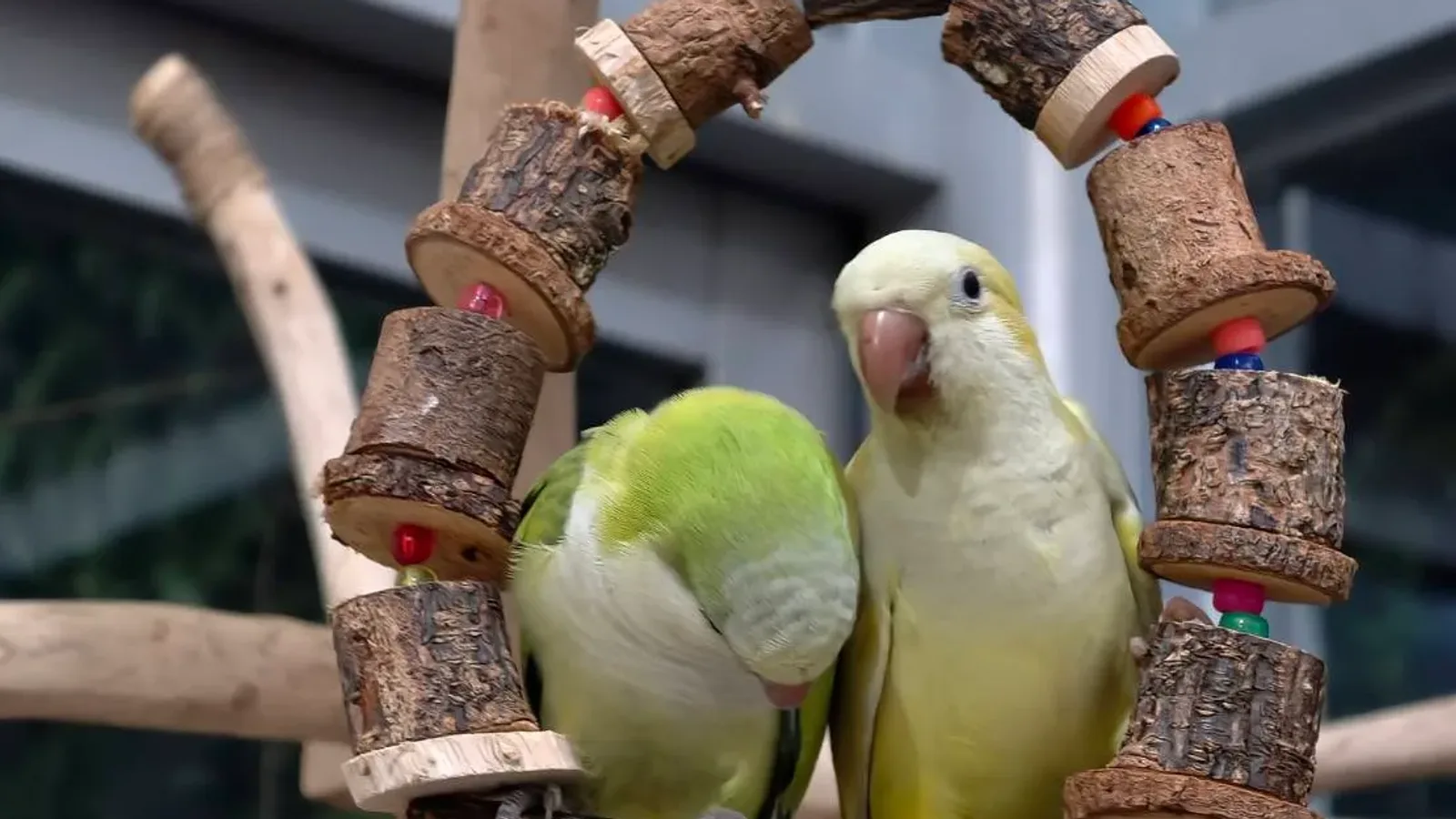
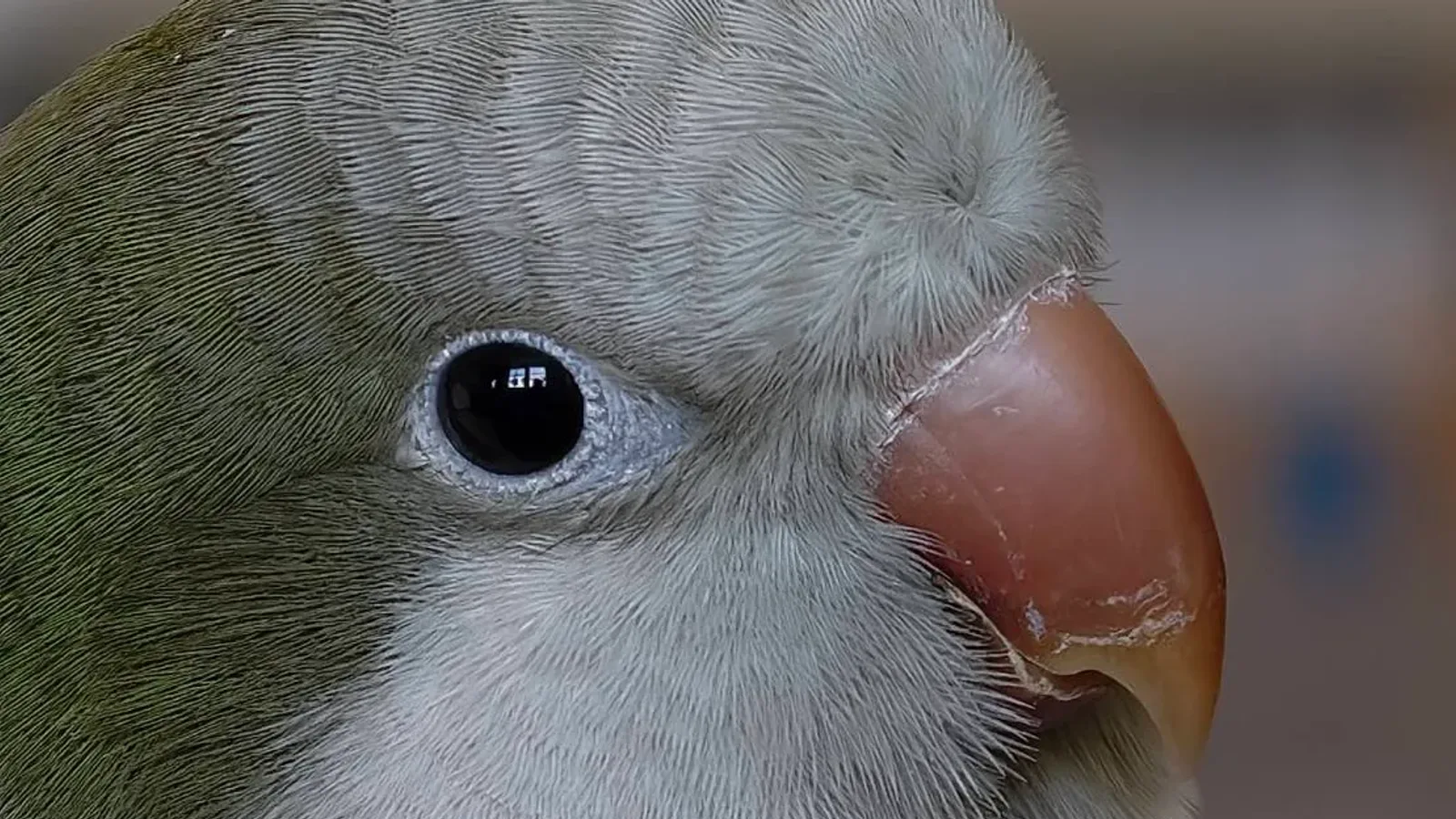
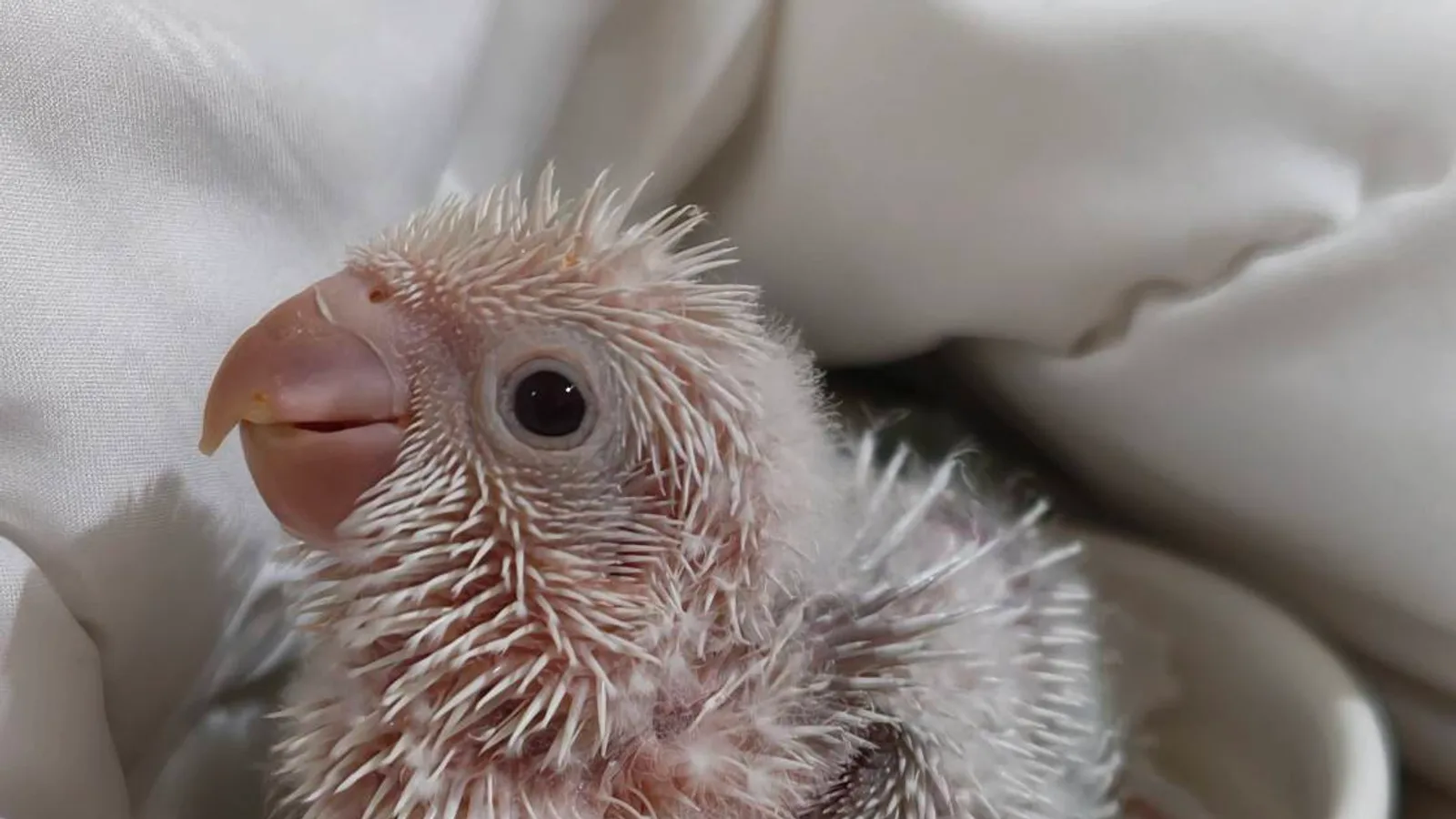
Monk Parakeet vs Sun Conure: Which Should You Choose? Noise, Tameness, Talking and Price Compared
 Written by the NokMonk team, monk parakeet breeders in ThailandUpdated 12 Sept 2026Read time 13 min
Monk parakeet vs sun conure compared by a breeder: noise, tameness, talking, Thai prices and which home suits which bird. Helps beginners choose.
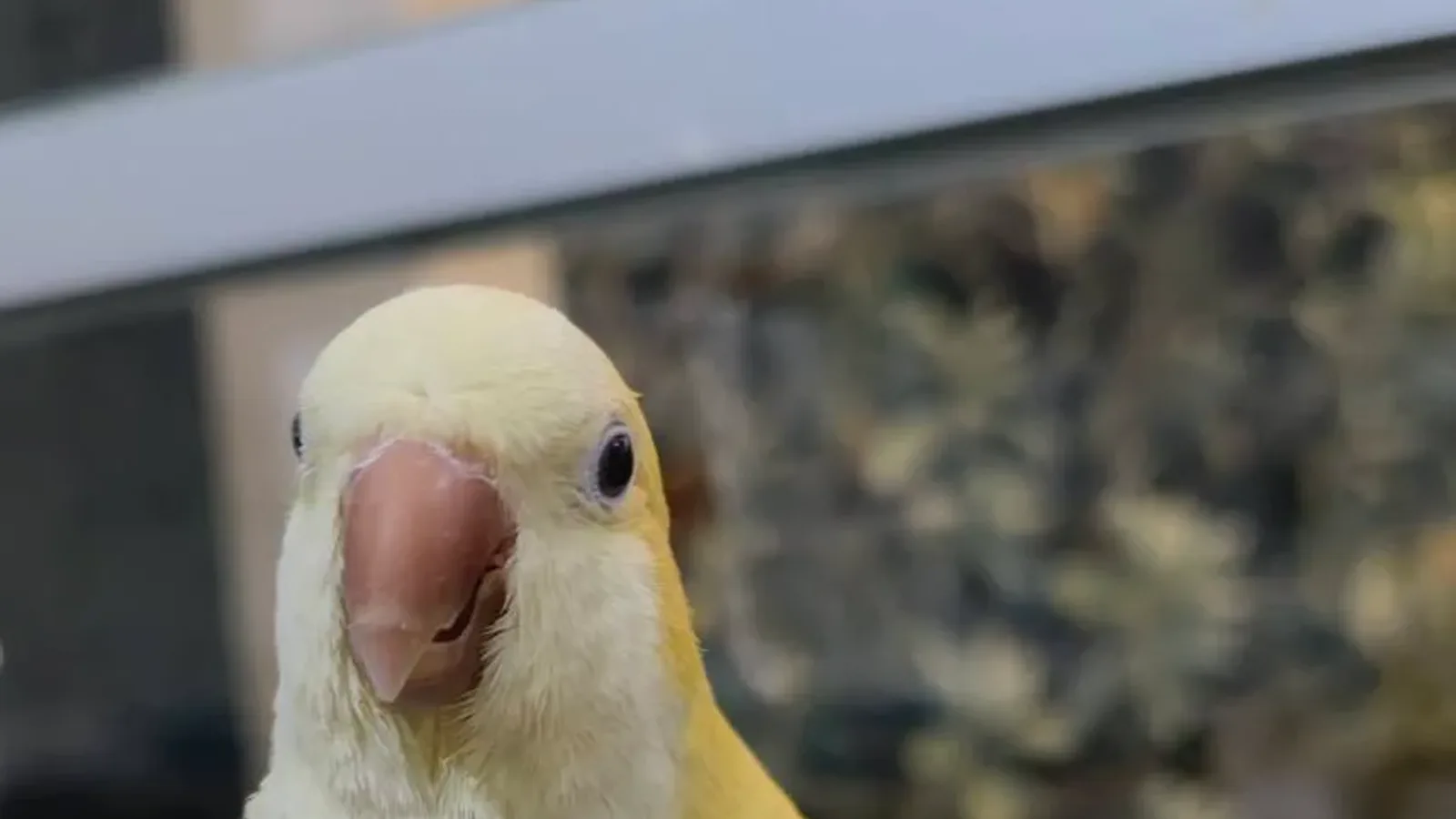
One of the questions I get asked most often when people message us is this: monk parakeet or sun conure, which one should I get? It makes sense. The 2 birds are roughly the same size, the entry prices are not far apart, and both are the medium sized parrots that beginners in this part of the world tend to look at first. But once you actually live with them, their personalities are so different that one household will be perfectly happy with one bird, while another household ends up rehoming the other within a few months.
I have bred and kept monk parakeets for many years, and I have kept a sun conure in the same house alongside them. In this article I will compare the two point by point: noise, tameness, talking ability, price, and what kind of home suits each bird. By the end you should be able to decide for yourself. You do not have to take my word for it. Just look honestly at what your home is like.
Monk Parakeet vs Sun Conure: The Short Answer
If you want a bird that talks clearly and you live in a condo or a terrace house, choose the monk parakeet. If you want a cuddly bird that wants to burrow into your collar all day, and your home can tolerate loud, piercing screeches, choose the sun conure. That is the shortest honest answer I can give.
Both are parrots of a similar size, around 28 to 30 centimetres long and roughly 100 to 120 grams. With good care, both can live 20 years or more as pets. So size and lifespan will not decide this for you. What really decides it is noise, talking, and the kind of tameness each bird offers.
| Comparison | Monk Parakeet (Quaker Parrot) | Sun Conure |
|---|---|---|
| Noise level | Moderate, lower pitched, chatters all day | Very loud, high pitched, goes straight through walls |
| Talking | Clear speech, learns many words | Limited, hoarse and hard to make out |
| Type of tameness | Bonds deeply with 1 person, cage territorial, needs ongoing training | Tames easily, bonds with everyone, loves physical contact |
| Starting price for hand fed babies | From 5,000 THB | From around 3,500 THB |
| Lifespan as a pet | 20 to 30 years | 20 to 30 years |
| Best suited to | Condos, terrace houses, people who want a talker | Detached houses, families home all day |
That table is the overview. Every row has details worth knowing before you decide, so I will expand on each one below.
Which Is Louder, the Monk Parakeet or the Sun Conure?
The sun conure is clearly louder, and what matters even more than the volume is the pitch. A sun conure's call is shrill enough to carry through the walls of a room. The monk parakeet is by no means a quiet bird, but its voice sits in a lower register and most of what you hear is muttering and chatter rather than screaming.
Picture it like this. When a sun conure sees you leave the room, or when it wakes up in the morning and again before bed, it will let out a high pitched contact call that goes on for several minutes at a stretch. In a condo with thin walls, the neighbours will hear it, no question. I have had a neighbour knock on my door when I kept a sun conure in a terrace house, and the bird was not doing anything unusual. That is simply the normal voice of the species.
A monk parakeet is loud in a different way. It talks to itself for most of the day, a stream of chatter, mimicry, clicking noises and the occasional contact call. When it is angry or startled it can screech too, but it does not drag on the way a sun conure does. Someone sharing a room with a Quaker parrot tends to feel that the bird is a good talker, rather than that it is deafening.
To sum up noise plainly: if sound is your main deciding factor, the monk parakeet is the safer choice. If you live in a detached house with some distance from the neighbours, a sun conure is perfectly manageable. But neither bird is quiet, and you need to accept that before buying either one.
Which Is Tamer, the Monk Parakeet or the Sun Conure?
The sun conure tames more easily, and it tames in a way that extends to the whole household. The monk parakeet can become just as deeply tame, but it usually picks 1 person to love, and it needs continued training or it may start biting again. This is the difference beginners most need to understand.
Sun conures are naturally physical birds. A hand raised baby will want to burrow under your shirt, sleep on your shoulder and have its head scratched all day, and it will usually let anyone in the house handle it. Even if it does not get played with all that often, it holds on to its tameness fairly well. The downside is that it is so people focused that some birds demand attention constantly. Leave one alone in its cage for long stretches and it will call for you without stopping.
A monk parakeet is tame in a different way. It is a clever bird with a mind of its own. Once tame, it will love its chosen person completely: following them around, riding on their shoulder, chattering to them. Other people in the house, though, may get bitten. And the trait that defines the species is cage territoriality. Many monk parakeets are perfectly happy to be handled outside the cage, but the moment a hand reaches inside, they lunge and bite. This is not an aggressive bird. It is the instinct of a species that builds and defends its own nest in the wild.
What I tell every person who collects a monk parakeet from me is this: practise step up every day for at least 5 to 10 minutes during the first 6 months, and open the cage door and let the bird walk out on its own before you pick it up. Never reach in to grab it. Do that and a monk parakeet will stay tame for the rest of its life. A sun conure needs almost no special training. Just play with it enough and it will be tame.

Which Is the Better Talker, the Monk Parakeet or the Sun Conure?
If your goal is a talking parrot, choose the monk parakeet without hesitation. Among the medium sized parrots, the monk parakeet is one of the very best talkers. Its speech is clear, easy to understand, and it keeps picking up new words. A sun conure will only talk in some cases and only a few words, in a hoarse voice that is hard to make out.
If you have ever searched for the best talking parrot, you have probably come across the name Quaker parrot again and again. That is just another name for the monk parakeet. Overseas it is ranked alongside some of the large parrots for talking ability, despite being far smaller. In my experience, a monk parakeet that is spoken to every day starts mumbling and imitating human speech at around 4 to 6 months, and says its first clear word somewhere between 6 months and 1 year. Some are slower, but they get there eventually.
The words a monk parakeet picks up first are the ones it hears repeatedly and with emotion: its own name, hello, or its owner's laugh. A talented bird will manage 10 to 20 short phrases, and it will often use them in context, like saying bye bye when it sees you pick up your keys. That is a kind of charm a sun conure simply cannot give you.
But I have to be straight with you here. Not every monk parakeet talks. Some choose to mimic other sounds instead, like the microwave, phone notifications or a barking dog. If you are buying a monk parakeet purely because you want a talker and you could not accept it if the bird never speaks, think again. Nobody can guarantee it, no matter which breeder you go to.
Some sun conures manage 2 or 3 words, like their own name or hi, but the voice is raspy and you will need to hear it several times before you catch it. If you want a sun conure, choose it for its affection and its colours, not for talking.
How Do Monk Parakeet and Sun Conure Prices Compare in Thailand Right Now?
For normal coloured hand fed babies, the prices are fairly close. A sun conure starts at around 3,500 THB, while a standard green monk parakeet starts at around 5,000 THB. Once you get into the colour mutations of the monk parakeet, though, the gap widens several times over. These are Thai market prices, and the table below shows the ranges I am seeing at the moment.
| Species and colour | Approximate price for hand fed babies (THB) | Notes |
|---|---|---|
| Monk parakeet, standard green | 5,000 to 9,000 | The original colour, easy to keep, ideal for beginners |
| Monk parakeet, green split | 10,000 to 16,000 | Looks green but carries a mutation gene, good for anyone planning to breed |
| Monk parakeet, blue | 15,000 to 25,000 | The most popular mutation among Thai keepers |
| Monk parakeet, Opaline / Turquoise / Lutino and combinations | 20,000 to 40,000 | Price depends on rarity and the parents' genetics |
| Sun conure, standard colour | Around 3,500 to 7,000 | Widely bred in Thailand, prices fairly stable |
| Sun conure, mutations such as Red Factor | Considerably higher than standard | Less common, priced by the breeder, ask case by case |
All of these figures are ranges seen in the market at the moment, not fixed list prices. Real prices shift with the season. When plenty of chicks are hatching, prices soften, and when chicks are scarce they climb. They also depend on tameness: a bird that has been hand fed and handled from the day its eyes opened costs more than a parent raised bird that was tamed later. And they depend on genetics, especially for monk parakeets whose parents are split for several mutations. Those birds fetch more than a bird of the same colour with unknown background.
Beyond the purchase price, I would ask you to look at the long term cost, which is about the same for both species. Expect roughly 300 to 600 THB a month for pellets, vegetables and fruit, 1,500 to 4,000 THB for a good quality cage, and a steady stream of toys to replace, because both birds love to chew things to pieces. Over 20 years the total comes to many times the price of the bird itself. So the difference in purchase price matters far less than choosing the right personality for your home.
Daily Care: Where Do Monk Parakeets and Sun Conures Differ?
Food, cage and the time you need to give are very similar. The main difference is that a monk parakeet needs material to chew and weave into a nest, while a sun conure needs more hands on time with people. Understand those 2 points and the rest of their care is almost identical.
On food, both should eat a good parrot pellet as the main diet, around 60 to 70 percent, with the rest made up of fresh vegetables such as water spinach, corn, carrot and steamed pumpkin, plus a little fruit. Sunflower seeds are for training rewards only, because both species put on weight easily. The monk parakeet in particular is prone to high blood fat if it eats too much seed. I have seen more than a few monk parakeets fed on nothing but sunflower seeds for years end up with ruined livers.
| Item | Monk parakeet | Sun conure |
|---|---|---|
| Minimum cage size (width x depth x height) | 60 x 60 x 90 centimetres | 60 x 60 x 90 centimetres |
| Bar spacing | No more than 1.5 to 2 centimetres | No more than 1.5 to 2 centimetres |
| Out of cage time per day | At least 2 to 3 hours | At least 2 to 3 hours |
| Must have extras | Chew wood, branches, paper to shred and weave | Sleeping tent, cloth to burrow in, rope toys |
| Bathing | 2 to 3 times a week | 2 to 3 times a week, loves playing in water |
On cages, if you have the budget and the space, always go bigger than the minimum. Both birds love to climb and need plenty of room for toys. The bars must be sturdy, because a monk parakeet is a formidable chewer. On a cheap, thin cage with bars that bend, it will genuinely chew a bar loose and squeeze out. I have seen it happen with my own birds.
On time, this is where the sun conure asks for more. A sun conure needs close physical contact with people every day. If nobody is home all day, it gets stressed and starts calling, and some birds begin plucking their feathers. A monk parakeet copes with being alone far better. Give it things to chew in the cage and leave some music or the TV on, and it will happily spend the whole day shredding paper and talking to itself, then come out to play with you in the evening.

Which Home Suits a Monk Parakeet, and Which Suits a Sun Conure?
Condos, terrace houses and homes where everyone is out at work all day suit the monk parakeet. Detached houses with someone always home, or families with children who want a bird that plays with everyone, suit the sun conure. Here is the breakdown.
Choose a monk parakeet if your home looks like this
- You live in a condo or terrace house with neighbours on the other side of the wall, and you do not want trouble over screeching.
- You are out at work 8 to 10 hours a day and can only play with the bird in the evening.
- You want a bird that talks, holds a conversation, and is clever enough to keep learning new tricks.
- You live alone or as a couple, without several people taking turns handling the bird.
- You have the patience to practise step up every day and can accept that the bird may bite early on.
Choose a sun conure if your home looks like this
- You live in a detached house with some distance from the neighbours, or your neighbours can put up with the noise.
- Someone is home almost all the time, for example you work from home or an older relative lives with you.
- You want a bird you can cuddle, stroke, carry around, and that is tame with everyone in the household.
- You have children who are old enough to handle a bird gently and you want them to enjoy it too.
- You love bright colours and are not fussed about whether the bird talks.
There is one situation I want to flag specifically: homes with young children under 5. A monk parakeet that guards its cage or its owner can bite a child who pokes a finger through the bars, and its bite genuinely draws blood. A sun conure can bite too if startled, but on the whole it is less inclined to. If you have young children, I lean towards the sun conure. If you do want a monk parakeet, put the cage somewhere the children cannot reach.
Common Mistakes When Choosing Between a Sun Conure and a Monk Parakeet
The most common mistake is choosing from photos and short clips without ever hearing the real voice or holding the actual bird. On video, a sun conure and a monk parakeet look equally adorable. What the clips do not show is the sound of a sun conure in a closed room, or the cage territoriality of a monk parakeet.
The second mistake is buying a baby that is far too young because you want it to bond with you from the start. With both species, if you take on a chick that still needs 3 to 4 hand feedings a day and you have never hand fed a bird before, the risk of aspiration and infection is very high. I recommend collecting the bird at around 8 to 10 weeks, when it is starting to eat on its own and only needs 1 or 2 feedings a day. You lose nothing in tameness, because both species become tame through daily play, not through feeding alone.
The third mistake is expecting the wrong things from the species. People who buy a sun conure and are disappointed it does not talk, and people who buy a monk parakeet and are disappointed it will not let everyone handle it, I see in equal numbers. The bird has done nothing wrong in either case. It is simply being itself. Read up before you buy and the bird will never need to move house.
One last thing I want to leave you with. If you have read this far and still cannot decide, go back to a single question: noise and your neighbours. Tameness can be trained and talking can be waited for, but a bird's voice cannot be changed, and it is the number 1 reason people in Thailand end up rehoming their birds. Once noise is settled, ask yourself whether you want a friend to talk to or a friend to cuddle, and the answer between the monk parakeet and the sun conure will be obvious.
Frequently asked questions
Can I keep a monk parakeet and a sun conure in the same cage?
Not recommended. A monk parakeet is territorial and has a stronger bite, so it can injure a sun conure. If you keep both species in one house, house them in separate cages and only let them out together under supervision.
Do female monk parakeets talk, or only males?
Both males and females talk. In my experience there is no clear difference. What matters far more than sex is being spoken to every day from a young age.
Why does my young sun conure not look like the pictures?
Baby sun conures have a lot of green mixed in and gradually turn full orange and yellow after moulting at around 1 to 2 years old. This is completely normal and does not mean the bird is not a true sun conure.
Is it true a monk parakeet bites harder than a sun conure?
Yes. A monk parakeet's beak is larger and stronger relative to its body size, and a full strength bite can draw blood. But a well trained bird that is never grabbed inside its cage hardly ever bites at all.
Should I buy a hand fed baby or an adult that is already tame?
If you have never hand fed a bird, buy a baby that has started eating on its own at around 8 to 10 weeks old. A tame adult is also a good option, especially a sun conure, which adjusts to a new owner quickly. An adult monk parakeet may take several weeks to accept a new person.
Will a single bird get lonely and fall ill?
If someone plays with the bird for at least 2 to 3 hours every day, both species can be kept alone. A sun conure gets lonely more easily and shows it by calling or feather plucking. A monk parakeet copes better on its own if it has things to chew and some background sound in the house.
Why does my monk parakeet weave everything into its cage?
Because the Quaker parrot is the only parrot that builds its own nest from twigs in the wild, and the weaving instinct comes built in. Giving it non toxic branches or paper to weave with reduces stress and greatly cuts down on chewing of things around the house.
Based on hands-on breeding and keeping experience, reviewed at every update · Published 8 Sept 2026