How Long Do Monk Parakeets Live? 20 to 30 Years With the Right Care
 Written by the NokMonk team, monk parakeet breeders in ThailandUpdated 12 Sept 2026Read time 12 min
Monk parakeets live 20 to 30 years with the right care, yet many never reach 10. Here is what cuts their lives short and how to keep yours longer.
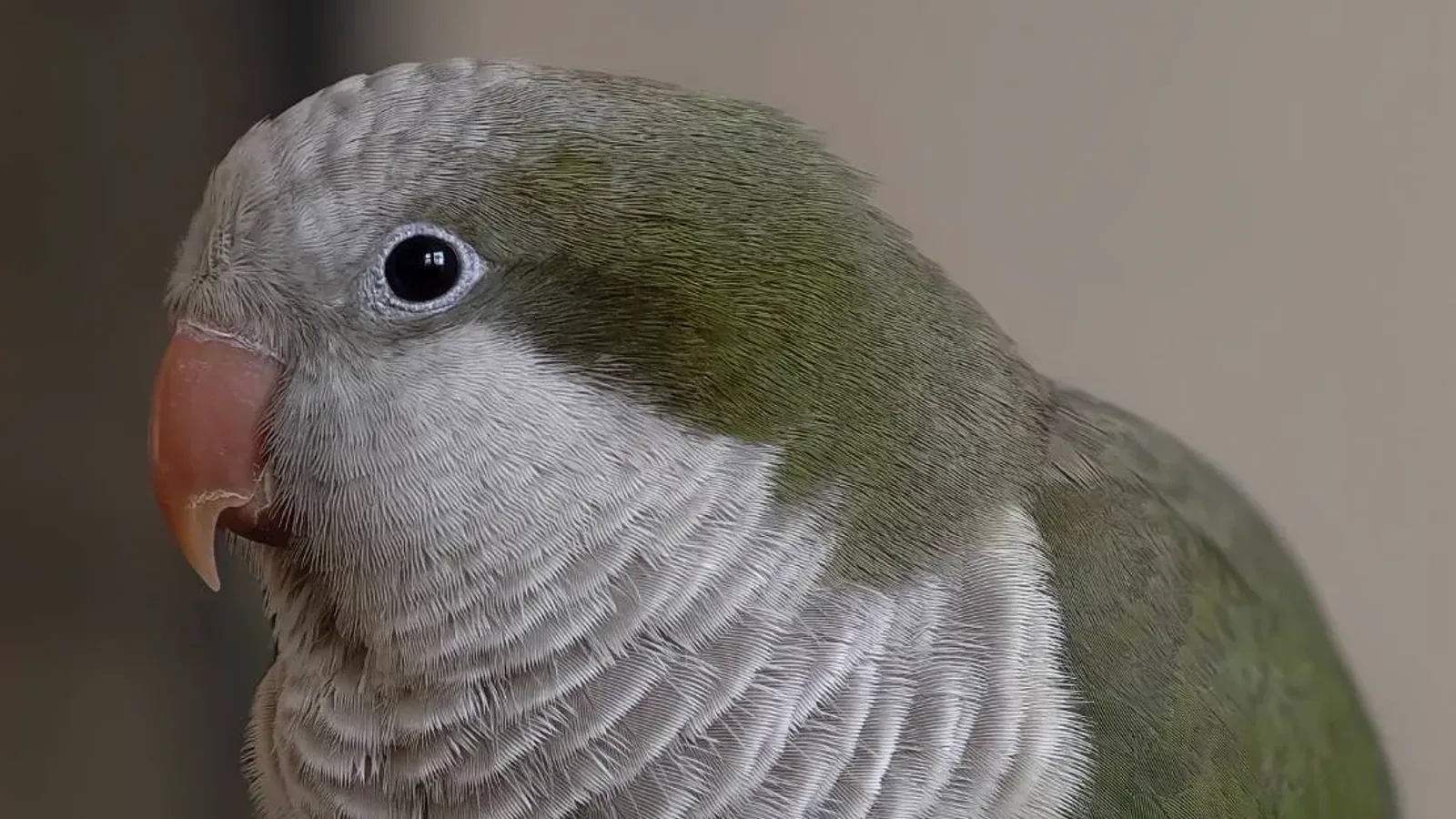
When people come to our home to look at chicks, the question I hear most often is not about price. It is "how long do monk parakeets live?" Most people have heard that parrots can live for decades, but many have also watched a friend's bird die within its first year. In this article I will draw on my years of keeping and breeding monk parakeets, also known as Quaker parrots, to explain what the real numbers are, what sends these birds to an early grave, and what you need to do if you want yours to stay with you for the next 20 to 30 years.
How long do monk parakeets live
A monk parakeet kept indoors and cared for properly has a life expectancy of roughly 20 to 30 years, and some go well beyond that. The uncomfortable truth, though, is that a large number of monk parakeets in Thailand die before they reach 10. That is not because the species is short lived. It is because the care they receive is still wrong in ways their owners never notice.
Compared with other parrots, the monk parakeet sits in the medium sized group with a fairly long lifespan. It clearly outlives budgies and cockatiels, but falls short of the big parrots like macaws and African greys, which can reach 50 years or more. Put simply, if you are 25 and take home a hand fed chick today, there is a very good chance this bird will still be with you when you turn 50.
That 20 to 30 year figure applies to birds living in a home. Wild monk parakeets live far shorter lives because they face predators, disease and food shortages. So when a pet bird does not make it to 10, that is not normal, and in most cases it was preventable.
Why so many monk parakeets in Thailand never reach 10
The three causes I see most often are the wrong diet, accidents inside the house, and owners realising the bird is sick far too late. None of these come down to luck or genetics. They come down to what the owner does every single day.
The problem is that monk parakeets are tough birds that rarely show they are unwell. In the wild, a bird that looks weak becomes a target for predators, so these birds are experts at hiding symptoms. By the time you notice fluffed up feathers, lethargy or a bird sleeping on the cage floor, it has usually been sick for days or even weeks.
Another thing people overlook is the myth that parrots are easy to keep, that sunflower seeds and water are enough. A bird can indeed survive on that, but it survives while quietly building up problems. Fatty liver disease develops silently, a little more each year, until one day a bird that always looked healthy collapses without warning.
Which diet shortens a monk parakeet's life
The diet that shortens a monk parakeet's life fastest is one made up of nothing but sunflower seeds and seed mix, with no vegetables and no pellets. It is high in fat, short on nutrients, and leads straight to fatty liver disease, which avian vets say is one of the most common causes of early death in this species.
Monk parakeets gain weight unusually easily compared with parrots of a similar size. They adore sunflower seeds and will pick them out of any mix and leave the rest. The result is a bird that takes in plenty of fat and very few vitamins, whose liver works overtime, and whose chest feels round and padded when you touch it.
The rough proportions I feed every bird in my house are in the table below. Adjust them to suit the individual, but the principle is fixed. Pellets are the foundation, vegetables come second, and seeds are strictly a snack.
| Food type | Daily share | Examples | Notes |
|---|---|---|---|
| Pellets | 60 to 70% | Pellets formulated for medium parrots | Available all day, replaced fresh daily |
| Fresh vegetables | 20 to 30% | Morning glory, kale, carrot, cooked pumpkin, capsicum, baby corn | Wash well, serve in the morning, remove before it spoils |
| Fruit | 5 to 10% | Apple (seeds removed), papaya, guava, a little banana | High in sugar, not needed every day |
| Seeds and nuts | No more than 10% | Millet, 2 to 3 sunflower seeds | Training rewards only |
| Strictly forbidden | 0% | Avocado, chocolate, onion, garlic, coffee, alcohol, salty food, fried food | Some of these can kill in a single bite |
If your bird currently eats only seeds, do not switch to pellets cold turkey. Monk parakeets are extremely stubborn about food, and some will starve themselves until their weight drops to a dangerous level. Mix pellets in gradually over 2 to 4 weeks and weigh the bird every day during the transition.

Household accidents that take monk parakeets before their time
Monk parakeets that are allowed out in the house die from accidents far more often than people expect, and almost every case involves something the owner never imagined could be dangerous. Here is the list I have either experienced myself or heard about most often from fellow keepers.
- Fumes from non stick cookware Teflon coated pans heated to high temperatures give off fumes you cannot see or smell, and they can kill a bird within minutes. Never keep a bird in the kitchen or in a room that opens onto it.
- Ceiling fans and fans with wide grilles A flighted bird will fly straight into the blades. Switch off every fan before you open the cage.
- Doors and hinges Birds love to perch on the top edge of a door. Someone closes it without looking and the bird is crushed.
- Buckets of water, open toilets, pots on the stove Monk parakeets cannot swim. Once they fall in, they cannot get out on their own.
- Dogs and cats in the home It does not matter how long they have lived together. One moment of instinct is all it takes. Cat saliva carries bacteria that are deadly to birds, so even a tiny scratch means a trip to the vet straight away.
- Escaping through a window or door Monk parakeets are strong fliers and can travel a long way. Even a clipped bird can glide out if the wind helps.
- Chewing electrical cables or decor containing lead and zinc Monk parakeets chew everything, and certain metals cause poisoning that builds up over time.
- Being stepped on or sat on Tame birds like to follow their owners around on the floor or burrow into a blanket on the sofa.
My approach is a house rule: before the cage opens, check 4 things. Fans off, windows shut, kitchen door closed, and every container of water put away. Once that becomes habit, accidents almost disappear.
Will a monk parakeet live long if kept on its own
Yes, a single bird can live a long and full life, provided the owner genuinely spends time with it every day. But a bird left alone in a silent cage for 10 hours a day with nothing to do will build up stress, and chronic stress in parrots directly shortens their lifespan.
The Quaker parrot is a flock bird by nature. In the wild they live in huge communal nests housing many families, and their brains are wired for constant social contact. When kept alone, the owner becomes the flock. If the flock disappears all day, the bird starts showing signs of distress such as nonstop screaming, feather plucking, or chewing at its own skin until it bleeds.
I see feather plucking far more often in monk parakeets kept alone with little to do than in birds that have a companion. Once plucking starts it is very hard to stop. Some birds pluck for the rest of their lives, and bare skin is much more prone to infection.
If you work outside the home all day, the options are to keep 2 birds so they have each other, or to set up a single bird's cage with chew toys and rotating enrichment, leave some sound playing, and spend at least 1 to 2 hours playing with the bird when you get home. A bird with things to do and someone to talk to is noticeably healthier and lives noticeably longer.
How to care for a monk parakeet so it stays with you for 20 to 30 years
The formula I use and recommend to everyone who takes a bird from my breeder is this: the right food, enough sleep, daily exercise, regular weighing, and a regular avian vet. Do all 5 and an ordinary monk parakeet has an excellent chance of reaching 20 or more.
- Feed according to the table above Pellets as the base, vegetables every day, seeds only as rewards, and clean water changed daily. Wash the water bowl every time, because monk parakeets love dunking their food and the water turns foul quickly.
- Give 10 to 12 hours of sleep in a dark, quiet place A bird that does not sleep enough because the television runs late in its room becomes irritable, its immunity drops, and it has more hormonal problems than usual. Cover the cage or move it to a dark room around 8 to 9 pm.
- Time out of the cage every day At least 1 to 2 hours to climb, walk and flap. A bird that never leaves its cage gets fat and its muscles waste away.
- Weigh weekly Most adult monk parakeets weigh around 100 to 140 grams depending on bloodline and build. What matters is knowing your own bird's normal weight. A drop of more than 10% with no obvious reason should be treated as abnormal.
- Have a vet who treats birds Find one while the bird is still healthy and take it for a checkup once a year. When your bird is genuinely sick, you will not have time to go looking for a vet.
The cage matters too. A monk parakeet needs a cage wide enough to fully stretch its wings in every direction, with room to climb. I recommend a width of at least 60 cm, with bar spacing no wider than 1.5 cm, because these birds love pushing their heads through the bars. Avoid cheap painted metal cages where the coating flakes, since the bird will chew and swallow it.

Warning signs that a monk parakeet is sick and needs a vet now
Symptoms that call for a vet visit the same day are: fluffed up and listless all day, sleeping on the cage floor, breathing with an open beak or a tail that bobs with each breath, not eating for more than 1 day, and droppings that change colour or turn unusually watery. Small parrots have very little energy in reserve. Waiting another 2 to 3 days to see what happens can be too late.
Slower signs that people tend to overlook include dull feathers that have lost their sheen, a beak that grows unusually long or peels in layers, nails that grow too fast, and a breastbone that feels like a sharp ridge (too thin) or that you cannot feel at all (too fat). These tell you that the diet or the liver has been a problem for some time.
I suggest photographing your bird's droppings and cage liner while it is healthy, so you have something to compare against when in doubt. Normal droppings from a monk parakeet on pellets are a formed lump with a dark green or brown portion, a white portion which is urine, and a small amount of clear liquid. If the white part turns yellow or bright green, or there is far more liquid than usual for several days, take the bird in for a check.
Monk parakeet care by life stage
Each stage of a bird's life carries different risks. Chicks are at risk from feeding mistakes and temperature, adolescents from hormones and accidents, and seniors from chronic disease. This table sums up what I focus on at each stage.
| Life stage | Approximate age | Main risks | What to focus on |
|---|---|---|---|
| Hand feeding chick | 3 to 8 weeks | Feeding errors, formula too hot, aspiration, chilling | Control formula and brooder temperature, feed on schedule, weigh daily |
| Weaned to adolescent | 2 months to 1 year | Seed addiction, hard to change diet, flight accidents | Start pellets and vegetables from day 1, train step up, set house safety rules |
| Sexual maturity | 1 to 3 years | Hormone surges, biting, cage aggression, egg binding in hens | 12 hours of sleep, avoid stroking the back and under the wings, no boxes or dark corners in the cage |
| Middle age | 3 to 15 years | Obesity, fatty liver, plucking from boredom | Diet control, exercise, rotating toys, annual checkup |
| Senior | 15 years and up | Arthritis, cataracts, heart disease, liver and kidney decline | Soft perches, food bowls within easy reach, blood tests as the vet advises |
Notice that middle age is the longest stage and the one where owners let their guard down most, because the bird looks strong and everything seems normal. This is exactly when fatty liver disease quietly takes hold. A bird that comes through this stage at a healthy weight with a healthy liver has a much better chance of reaching 25 to 30.
Plan for the long haul before you bring a monk parakeet home
Before you take on a monk parakeet, think of it as an animal that will be with you for as long as it takes a child to be born, finish university, and work for several years after that. The cost and the responsibility do not end with the purchase price.
Current Thai market prices for hand fed chicks run roughly as follows. A standard green is 5,000 to 9,000 THB, a green split 10,000 to 16,000 THB, a blue 15,000 to 25,000 THB, and Opaline, Turquoise, Lutino and combination mutations 20,000 to 40,000 THB. Prices move with the season, how tame the bird is, and the genetics of the parents. But whatever colour you buy, the lifespan is identical. An expensive mutation does not live a day longer than a plain green.
What costs more than the bird itself is the care over 20 to 30 years: pellets, vegetables, toys that get chewed to pieces every month, annual checkups, and treatment when the bird falls ill, which can run from a few thousand to tens of thousands of baht per visit. If you are not ready for that, keeping a bird alive for decades becomes very hard.
The questions to answer honestly before you commit are these. If you move house, get married, have children or take a job overseas, where does this bird go? And if you fall seriously ill or pass away first, who takes over? Monk parakeets that are passed from owner to owner become stressed and almost all develop behavioural problems. Having a backup plan from day 1 is part of raising a bird that lives a long life.
To sum up, the monk parakeet, or Quaker parrot as it is known in the West, is not a short lived bird. It is a bird ready to spend 20 to 30 years with you, as long as you do not accidentally cut that short. The right food, a safe home, your time, and a vet when it counts. That is all it takes for the little chick you are hand feeding today to become an old friend still climbing onto your shoulder decades from now.
Frequently asked questions
How can I tell a monk parakeet's age if it has no leg band?
A chick under 6 months has a short tail, the grey on the forehead and chest is not yet well defined, and it still moves clumsily. Once the bird is fully grown, it is almost impossible to judge age from the outside. You have to rely on a leg band or the breeder's records.
Does clipping a monk parakeet's wings help it live longer?
Not necessarily. Clipping reduces the risk of escape and fan strikes, but a bird that cannot fly gets less exercise, gains weight more easily, and is at risk of falling and splitting its chest. Decide based on your home and its safety, not on convenience.
Can I share my meals with my monk parakeet?
A little is fine if it is plain cooked rice, boiled egg, boiled vegetables or unseasoned cooked beans. Never give anything salty, oily or fried, or anything containing onion or garlic, because the bird's kidneys and liver cannot cope with it over the long term.
My female monk parakeet lays eggs with no male around. Is that dangerous?
It can be, if she lays often or an egg gets stuck inside her, which can kill a bird within hours. Reduce hormonal triggers such as dark boxes, stroking her back, and more than 12 hours of light per day, and add calcium. If she strains for a long time or becomes listless, take her to a vet immediately.
Can an older rehomed monk parakeet still be tamed?
Yes. Monk parakeets learn throughout their lives, but it takes longer than with a hand fed chick. Start by earning trust, then train step up with rewards, and never rush to grab the bird. Plenty of birds over 10 years old have gone on to become the tamest bird in the house.
How often should a monk parakeet bathe?
2 to 3 times a week is about right. You can mist the bird with room temperature water or set out a shallow dish for it to splash in on its own. Bathe during the warm part of the day so the feathers dry before bedtime.
Can a monk parakeet live in an air conditioned room?
Yes, as long as the air con does not blow directly onto the cage and the temperature does not change suddenly. Birds are comfortable at roughly 24 to 28 degrees Celsius. If you see the bird fluffed up or shivering, it is too cold.
Based on hands-on breeding and keeping experience, reviewed at every update · Published 8 Sept 2026