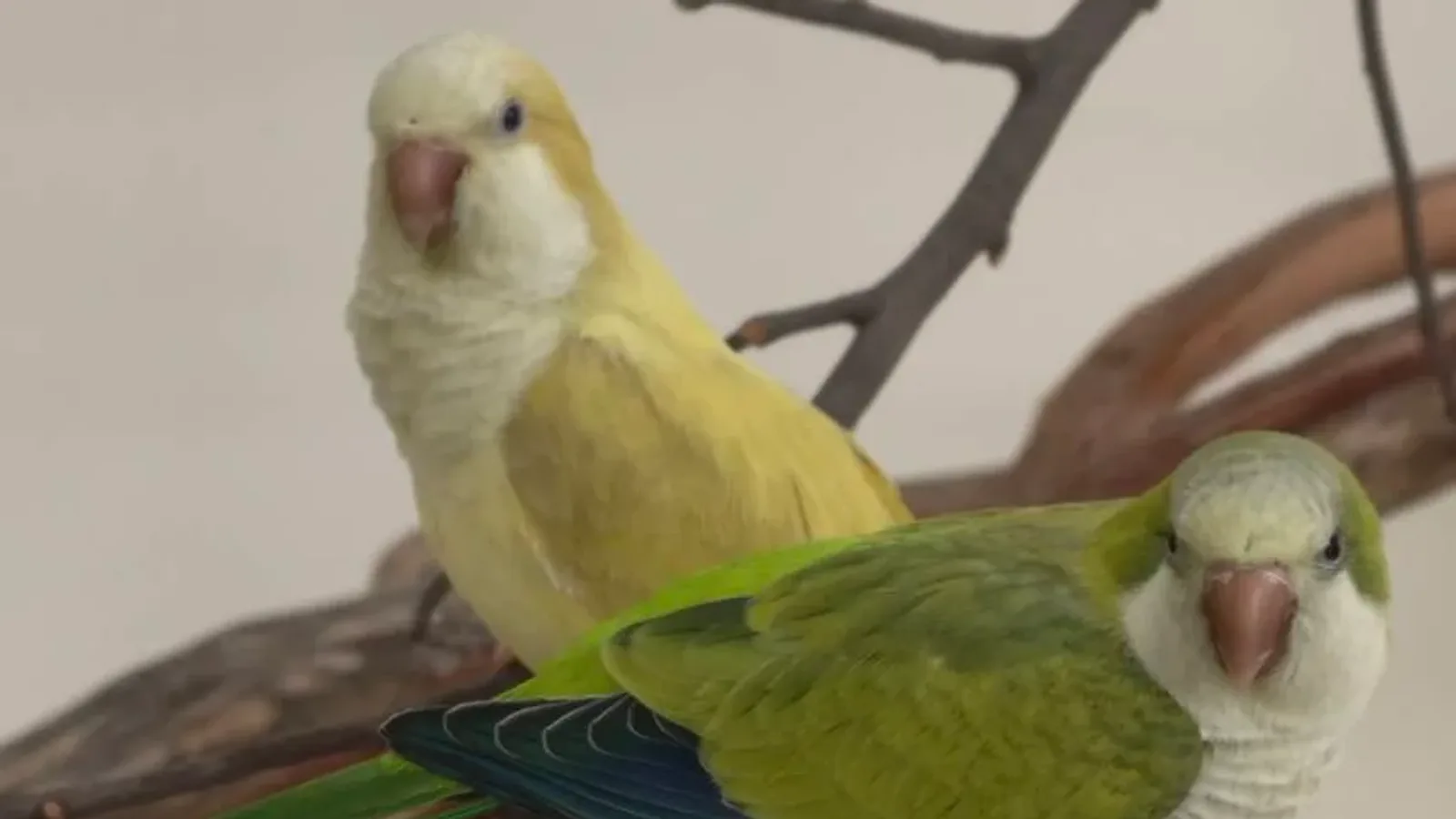
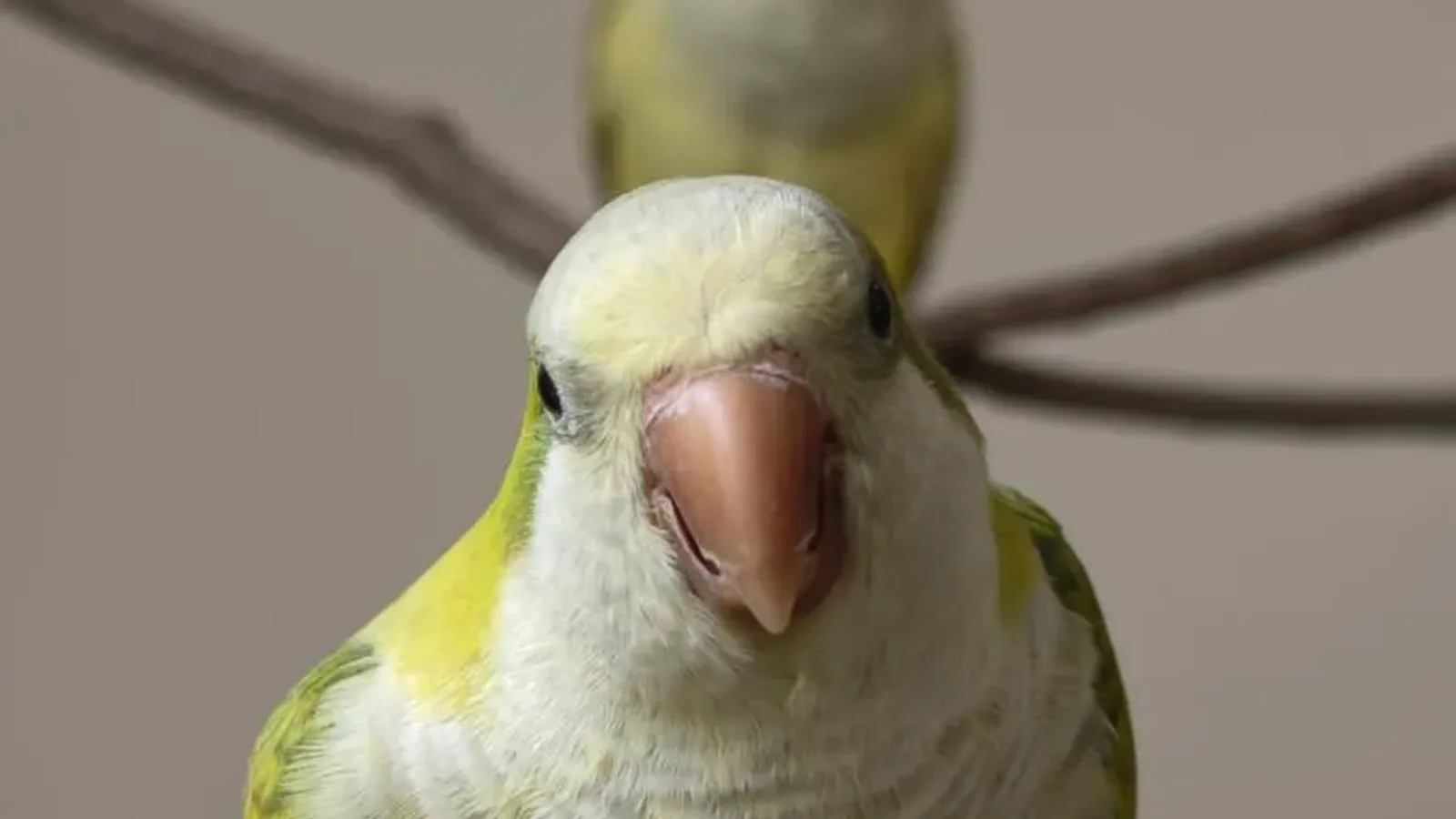
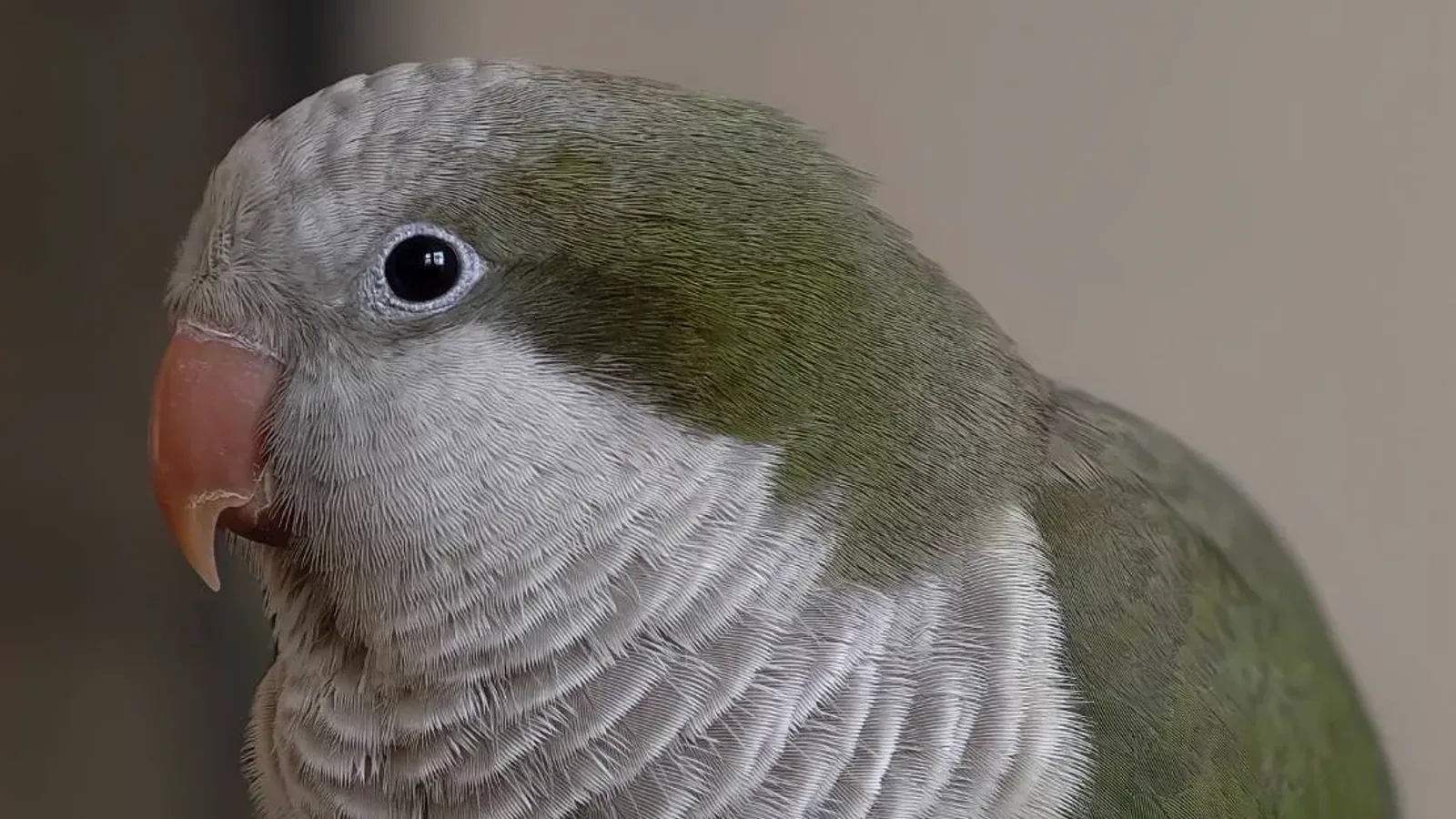
Bringing Home a Baby Monk Parakeet: The First 7 Days Guide for New Owners
 Written by the NokMonk team, monk parakeet breeders in ThailandUpdated 12 Sept 2026Read time 14 min
What to do on day 1 with a baby monk parakeet. Temperature, hand feeding schedules, and what to do when a new bird refuses food, from a working breeder.
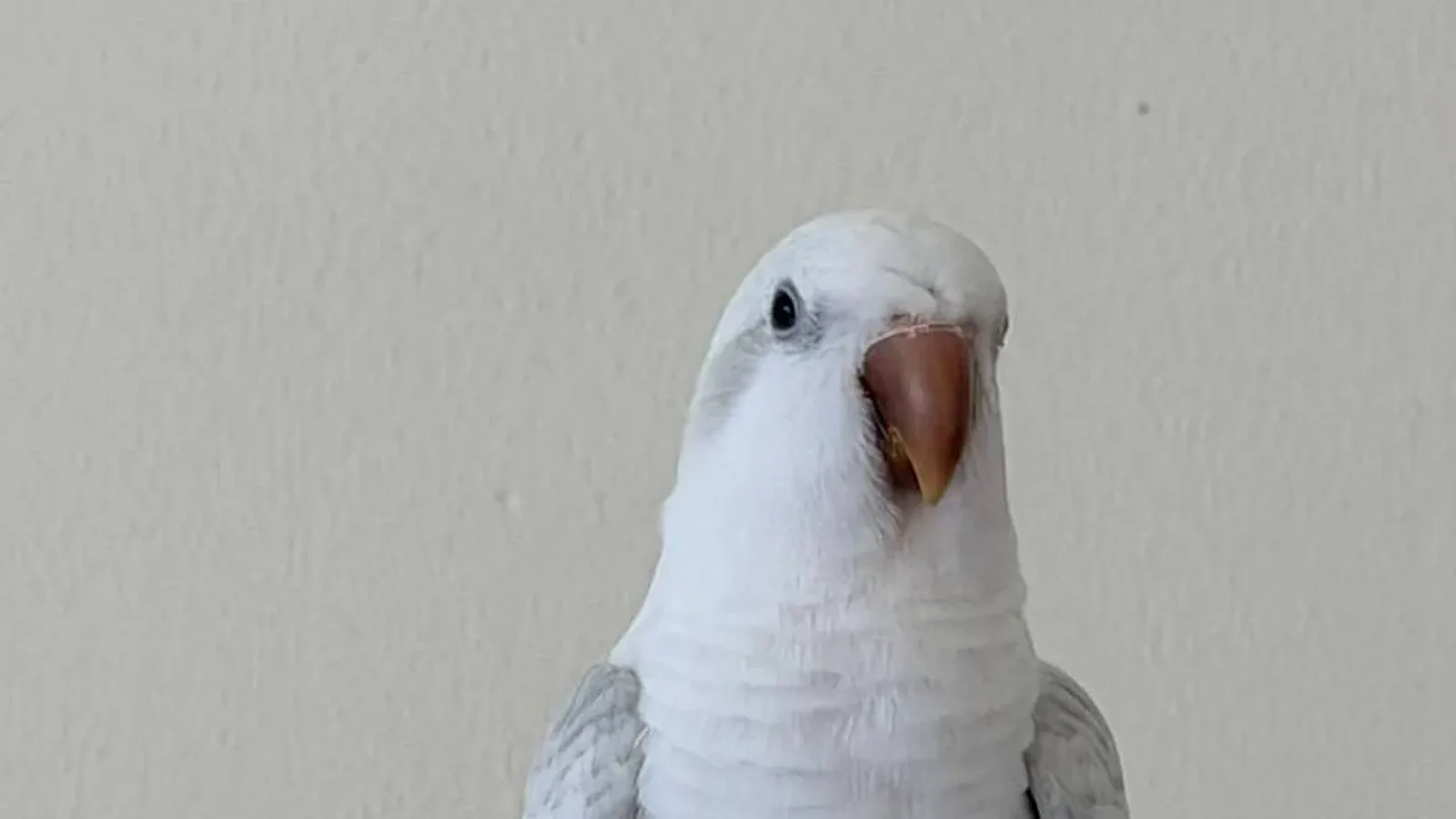
The first 7 days after a baby monk parakeet arrives home are when it is most likely to die. Not because the bird is weak, but because new owners get small things wrong without knowing they matter. Keeping the bird in an air conditioned room, feeding formula that is too cool, or handling the bird all day from the moment it arrives are the usual culprits.
I have been keeping and breeding monk parakeets for years and have sent dozens of hand fed babies to new homes. The question I get most often in the first 3 days is always the same: "My bird won't eat, what do I do?" This article puts everything you need to do and everything you must avoid into the order that actually works, from day 1 through day 7. Follow it properly and the odds of a healthy, settled bird are very high.
What to prepare before the bird arrives
You need a warm brooder box, the same hand feeding formula the breeder uses, and a digital scale ready before the bird reaches your door. Do not plan on shopping the same day you collect the bird. You will not have the time, and the bird will be stressed while it waits.
The list of essentials is short, but every item on it matters. This is exactly what I tell every customer before a bird leaves my place.
- A brooder box or nursery tub A clear plastic tub with a lid or a thick cardboard box both work. Line the floor with tissue paper or a towel with a tight weave. Never use cloth with loose threads, because a chick's nails will catch and a leg can break.
- Hand feeding formula Ask the breeder exactly which brand they use and at what mixing ratio, then buy 1 bag of that same brand in advance. Switching formula in the first week is one of the top reasons a new bird refuses to eat.
- Feeding syringes, 10 to 20 cc Have at least 2 on hand, because the plunger on one will start to stick after a few days.
- A digital scale An ordinary kitchen scale is fine. Expect to pay around 150 to 300 THB at Thai market prices. It must read in 1 gram increments. Weight is the single number that tells you whether the bird is on track or not.
- Thermometers A small one that sits inside the box costs under 100 THB, plus a separate one for checking formula temperature.
- A heat source A 25 to 40 watt incandescent bulb or a pet heating pad. You only need this when the room drops below 27 degrees.
What you do not need yet is a large cage, toys, or fancy perches. A hand fed baby will not use any of these in the first 7 days. Buy them later, once the bird starts flying and eating on its own.
What to do on the first day
On day 1 you only do 3 things: keep the bird warm, feed on schedule, and let it rest somewhere quiet. Everything else can wait. The less you fuss with the bird on the first day, the faster it settles in.
The very first thing to do when you walk through the door is weigh the bird and write the number down. This is your baseline, and you will compare every morning's weight against it for the next 7 days. Most baby monk parakeets at 5 to 7 weeks old weigh somewhere between 85 and 120 grams, depending on the bloodline and the parents.
Next, place the bird in the brooder box you prepared, cover half the top so it is partly dark, and put the box in a room with no air conditioning, no fan blowing directly on it, and not much foot traffic. A bird that has just travelled will sleep most of the time. That is normal, not a sign of illness.
For feeding on day 1, if the bird arrives in the afternoon or evening, feed at the same times the breeder was feeding. Do not skip a meal to let the bird "calm down first". A Quaker parrot at this age should never go more than 6 hours without food during the day. If the bird refuses to open its beak at the first feed, jump to the section below on new birds that will not eat.
The thing to watch on day 1 is the droppings. A bird that has just travelled may pass loose or darker green droppings from stress. If by day 2 the droppings are formed again with a white portion, that is normal. If they stay watery and unusually foul smelling for 2 days running, get the bird to an avian vet quickly.
What temperature does a baby monk parakeet need in the first week
A hand fed baby that is almost fully feathered, roughly 5 to 7 weeks old, should be kept at 28 to 30 degrees. If the feathers are still coming in and you can clearly see skin, it needs 30 to 32 degrees. Most of the time the climate in Thailand, Malaysia and Singapore already sits in this range, so the real problem is never heat. It is air conditioning and fans.
| Feather stage / approximate age | Ideal temperature | Heat lamp needed? |
|---|---|---|
| Pin feathers, skin clearly visible (3 to 4 weeks) | 30 to 32 degrees | Yes, all day and especially at night |
| Mostly feathered, pin feathers still on head and neck (5 to 6 weeks) | 28 to 30 degrees | Only at night or on rainy days |
| Fully feathered, starting to flap (7 to 8 weeks) | 26 to 29 degrees | Usually not, unless the room is below 26 degrees |
| Weaned, eating on its own | Normal room temperature, no direct draught | No |
You can read the bird itself instead of relying on the thermometer alone. A bird that is hunched, fluffed up, shivering, or pressed into a corner of the box is cold. A bird panting with its beak open, holding its wings away from its body, or moving to the far side away from the lamp is too hot. Both need fixing straight away.
If you use a bulb, aim it at only half the box so the bird can walk away from the heat on its own. Never put the bulb closer than 30 centimetres to the bird, and never use a red or blue poultry brooder lamp inside a closed box. Those run far too hot for a small container.
One more word on air conditioning. A room at 25 degrees feels comfortable to a person, but for a baby monk parakeet it is cold enough to slow the digestive system. Formula sits in the crop, then sours. This is the biggest reason hand fed babies die in homes where the owner is doing everything else right but sleeps with the aircon on.

How often to feed and how much per feed
A hand fed baby at 5 to 6 weeks, the age most people bring home, gets 3 feeds a day at roughly 10% of body weight per feed. A 100 gram bird gets 10 cc per feed. Younger birds need more frequent feeds with less volume each time.
| Approximate age | Feeds per day | Amount per feed | Suggested feeding times |
|---|---|---|---|
| 3 to 4 weeks | 4 to 5 feeds | 6 to 8 cc | 07:00 / 11:00 / 15:00 / 19:00 / 23:00 |
| 5 to 6 weeks | 3 feeds | 9 to 12 cc | 07:00 / 13:00 / 20:00 |
| 7 to 8 weeks | 2 feeds | 10 to 14 cc | 07:00 / 20:00, with pellets and fruit left out to explore |
| 9 to 10 weeks | 1 feed (before bed) | 10 to 14 cc | 20:00 until the bird loses interest in the syringe |
Formula temperature matters far more than most people expect. It needs to be 38 to 40 degrees at the moment you feed. Above 42 degrees you risk crop burn, which is hard to treat and often fatal. Below 36 degrees the bird will refuse it and whatever goes in digests slowly. Use the thermometer every single time. Do not test it on the back of your hand.
Mix fresh formula for every feed. Never keep leftovers and reheat them, and never warm formula in a microwave, because it heats unevenly and leaves scalding hot pockets hidden inside. The safe method is to mix the powder with hot water and wait for it to cool to 40 degrees before feeding.
Before every feed, gently feel the crop at the base of the neck on the front. If it is still full and firm, the previous meal has not gone down. Do not feed on top of it. Wait until the crop has almost flattened. This matters most in the morning, when the crop should be completely empty after the night. Food still sitting there at breakfast is a warning sign to watch closely.
What to do when a new bird will not eat
A new bird refusing its first feed or two is normal stress behaviour. Check 3 things first: box temperature, formula temperature, and whether the crop is empty. Then try again in 1 to 2 hours. If the bird has taken nothing for more than 24 hours, or has lost more than 10% of its day 1 weight, go to a vet immediately.
In my experience a new bird not eating comes down to a handful of causes, and most of them can be fixed at home. Work through them in this order.
- The bird is cold This is the number 1 cause. A cold chick will not respond to the syringe at all. Warm the box up first, wait 30 minutes, then try again. Many birds start eating the moment they warm up.
- Formula too cool or too thick Check the temperature again and mix it slightly thinner, more like drinking yoghurt than the kind you eat with a spoon.
- Different brand or recipe A change in taste and smell throws the bird off. If you genuinely have to switch, blend in the new brand 25% at a time over 4 days.
- Different feeding method Some breeders feed with a spoon, some with a syringe, some with a crop tube. Ask exactly what they used and copy it for the first week. A baby monk parakeet opens up when it feels gentle pressure at the side of the beak, not something pushed in from the front.
- Too many people, noise, or bright light Feed alone in a quiet spot with soft lighting. Keep children and other pets out of the room while you feed.
- Crop not yet empty If there is still food in the crop the bird is simply not hungry. Do not force it. Add warmth and wait.
One more thing beginners often misread. A bird eating less on days 5 to 7 is not necessarily sick. If the bird is approaching 8 weeks, it will naturally start refusing the syringe because it is getting ready to wean. You can tell the difference because a weaning bird is still bright and active, starts picking at pellets, and drops no more than 5 to 8% of its weight, which is the normal slimming down before first flight. A sick bird is quiet, fluffed up, and dozes with its eyes shut in the daytime.
Day by day checklist for the first 7 days
This is the sequence I give to everyone who takes a bird from me. The idea is simple. The first 3 days are about calm and routine. From day 4 to day 7 you slowly start building trust. There is no need to rush. Monk parakeets bond with people easily, and if the health foundations are solid the tameness follows on its own.
| Day | What to do | What to watch for |
|---|---|---|
| Day 1 | Record baseline weight, set up the brooder box, feed on the breeder's schedule, no handling | Lots of sleeping is normal. Check that the bird opens up for food and that droppings have a white portion |
| Day 2 | Weigh in the morning before the first feed, feel whether the crop is empty, feed on schedule | Weight should be down no more than 3 to 5 grams from day 1. Droppings should start to firm up |
| Day 3 | Weigh, feed on schedule, start talking softly during feeds so the bird learns your voice | The bird should start begging when it sees the syringe. This is the best sign of all |
| Day 4 | Weigh, then rest your hand still inside the box for 5 minutes after each feed | Weight should be stable or starting to climb. Crop completely empty every morning |
| Day 5 | Weigh, let the bird climb onto your hand by itself inside the box, do not lift it out yet | Does the bird approach your hand or back away? If it backs off, repeat day 4 for 1 more day |
| Day 6 | Weigh, lift the bird out onto your lap for 10 minutes at a time, offer small pellets to explore if it is over 6 weeks old | The bird should flap its wings and start preening itself, which means it is relaxed |
| Day 7 | Weigh and review the 7 day trend, begin short step up sessions 2 to 3 times a day | Weight after 7 days should not be more than 5% below day 1. Pass this and the bird has settled in |
On weighing, always do it first thing in the morning before the first feed. A 10 cc feed weighs about 10 grams, so weighing after a feed gives you a misleading number. Write it down on paper or in a note on your phone every day and look at the trend, not the individual days.

Things you must never do in the first week
There is a long list, but the 3 mistakes that lose the most birds are keeping it in an air conditioned room, switching formula suddenly, and feeding on top of a crop that has not emptied. The rest are errors I see again and again from people who love their bird but simply did not know.
- Do not take the bird out to show friends or for photos outside the home In the first 7 days it has no resistance to the germs in a new environment, and constant changes of scenery stress it until it stops eating.
- Do not bathe or mist a hand fed baby The feathers do not yet have their full oil coating. A wet chick loses body heat very fast. Wait until it is fully feathered and weaned.
- Do not put it with other birds in the house Even other monk parakeets. Quarantine for at least 30 days in a separate room with separate equipment, and wash your hands before touching your existing birds.
- Do not feed human food Rice, bread, milk, chocolate, avocado, and anything salty are all off the table. The digestive system at this age is delicate. Commercial hand feeding formula is the only thing it should get.
- Do not line the box with sand, sawdust, or rice husk The chick will eat it and end up with a blocked crop. Tissue paper or a tight weave towel only.
- Do not clip wings or trim nails in the first week Wait until the bird is strong and settled. Do it too early and the bird will fear hands for a long time.
- Do not use gas stoves, scented candles, or non stick pans near the bird Fumes from an overheated non stick pan are severely toxic to birds. Keep the box well away from the kitchen.
- Do not point a fan directly at the box If the room is genuinely hot, run a fan on low oscillation in a corner of the room, not aimed at the bird.
- Do not let small children, cats, or dogs near the box Even a pet that would never attack can stress a chick into refusing food just by staring at it.
The last thing beginners rarely think about is sleep. A baby monk parakeet needs around 10 to 12 hours of unbroken darkness and quiet each night. If the box sits in a room where the TV runs late or the lights stay on all night, the bird will not rest properly and its immune system suffers. Draping a cloth over part of the box helps.
Signs that mean a trip to the avian vet today
If your bird shows any of the following, take it to a vet who treats birds specifically on the same day. Do not wait to see how it looks tomorrow. Chicks crash far faster than adult birds, and one that looked fine in the morning can be in crisis by evening.
- Food still in the crop in the morning after a full night, or a crop that feels gassy and sloshy, with a sour smell from the beak
- Weight dropping 3 days in a row, or a total loss of more than 10% from day 1
- No food taken at all for more than 24 hours, even after fixing temperature and formula
- Droppings that are clear water with no white portion, or that are black, red, or persistently foul smelling
- Open beak breathing, tail bobbing in time with each breath, or clicking sounds while breathing
- Vomiting or bringing up lumps of food, which is different from the normal head shake after a feed
- Lethargy, fluffed feathers, eyes closed in the daytime even though the box is warm, and no reaction to the syringe
- Legs splayed out to the sides, unable to stand, or one wing drooping
Before you go, get 3 things ready: the 7 day weight log, the formula brand and mixing ratio, and a photo of the latest droppings. These help the vet reach a diagnosis much faster. On the way, keep the bird in a warm, dark box and do not let the car's aircon blow on it.
A final word for every new owner. The monk parakeet, which Americans call the Quaker parrot, is a tough and adaptable bird compared with other parrots of a similar size. If you get through the first 7 days with a stable weight and an empty crop every morning, the rest is the fun part. Your bird will start calling your name, climbing over to find you, and become part of the household for the next 20 odd years. The patience you put in during the first week always pays off.
Frequently asked questions
How old should a baby monk parakeet be before a beginner takes it home?
For first time owners I recommend 5 to 6 weeks or older. At that age the bird is almost fully feathered, needs only 3 feeds a day, and copes much better with temperature swings. Babies under 4 weeks should stay with an experienced hand feeder until they are older.
How long do I need to keep the new bird away from my other birds?
At least 30 days, in a separate room with completely separate equipment, and wash your hands every time before handling your existing birds. Many bird diseases show symptoms slowly and spread very easily.
Is it normal for a baby monk parakeet to cry constantly?
It is normal around feeding time or when the bird sees a person. If it keeps up a shrill cry right after a feed with a full crop, check whether it is cold first, because that kind of crying usually means the bird is uncomfortable.
I work full time. Can the feeding times be a bit flexible?
A bird 5 weeks or older can tolerate about 1 hour either side of its usual time, but never let the gap between daytime feeds exceed 7 hours. If that is genuinely impossible, have someone at home cover the midday feed, or wait for a 7 week old bird that only needs 2 feeds a day.
Does a baby Quaker parrot need extra water while it is being hand fed?
No. Formula mixed at the correct ratio already contains enough water. Syringing plain water carries a real risk of it going into the lungs. Start offering a shallow water dish once the bird is picking at pellets on its own.
My bird shakes its head after feeding and flicks formula around. Is something wrong?
1 or 2 shakes with a little formula at the corners of the beak is normal. If a lot of liquid runs out of the beak, or the bird repeatedly brings food back up after a feed, stop feeding and check the formula temperature and the amount per feed straight away.
When can I start step up training and move the bird to a cage?
Short step up sessions can start from day 7 if the weight is stable. Moving to a cage should wait until the bird perches steadily and is eating pellets on its own, which for most birds is 8 to 9 weeks. Start with low perches and line the cage floor with paper in case of falls.
Based on hands-on breeding and keeping experience, reviewed at every update · Published 8 Sept 2026