Monk Parakeet Price Guide: Costs by Colour and How to Tell if a Price Is Fair
 Written by the NokMonk team, monk parakeet breeders in ThailandUpdated 13 Sept 2026Read time 10 min
Monk parakeet prices in Thailand right now: green hand-fed chicks 5,000 to 9,000 THB, blue 15,000 to 25,000 THB. Full price table by colour and how to spot a ba
The question I get asked more than any other is how much a monk parakeet costs, and why one listing says 5,000 THB while another says 30,000 THB for what looks like the same bird. In this article I will draw on my years of breeding and keeping monk parakeets to explain where prices sit in the Thai market at the moment, what makes one bird cost more than another, and how a first-time buyer can judge whether the number in front of them makes sense.
I have written this for people about to buy their first bird, so that you can make the call yourself rather than simply trusting the seller. A monk parakeet can live with you for 20 years or more. What you pay on day 1 matters far less than bringing home a healthy bird that genuinely fits your household.
How Much Does a Monk Parakeet Cost in Thailand Right Now
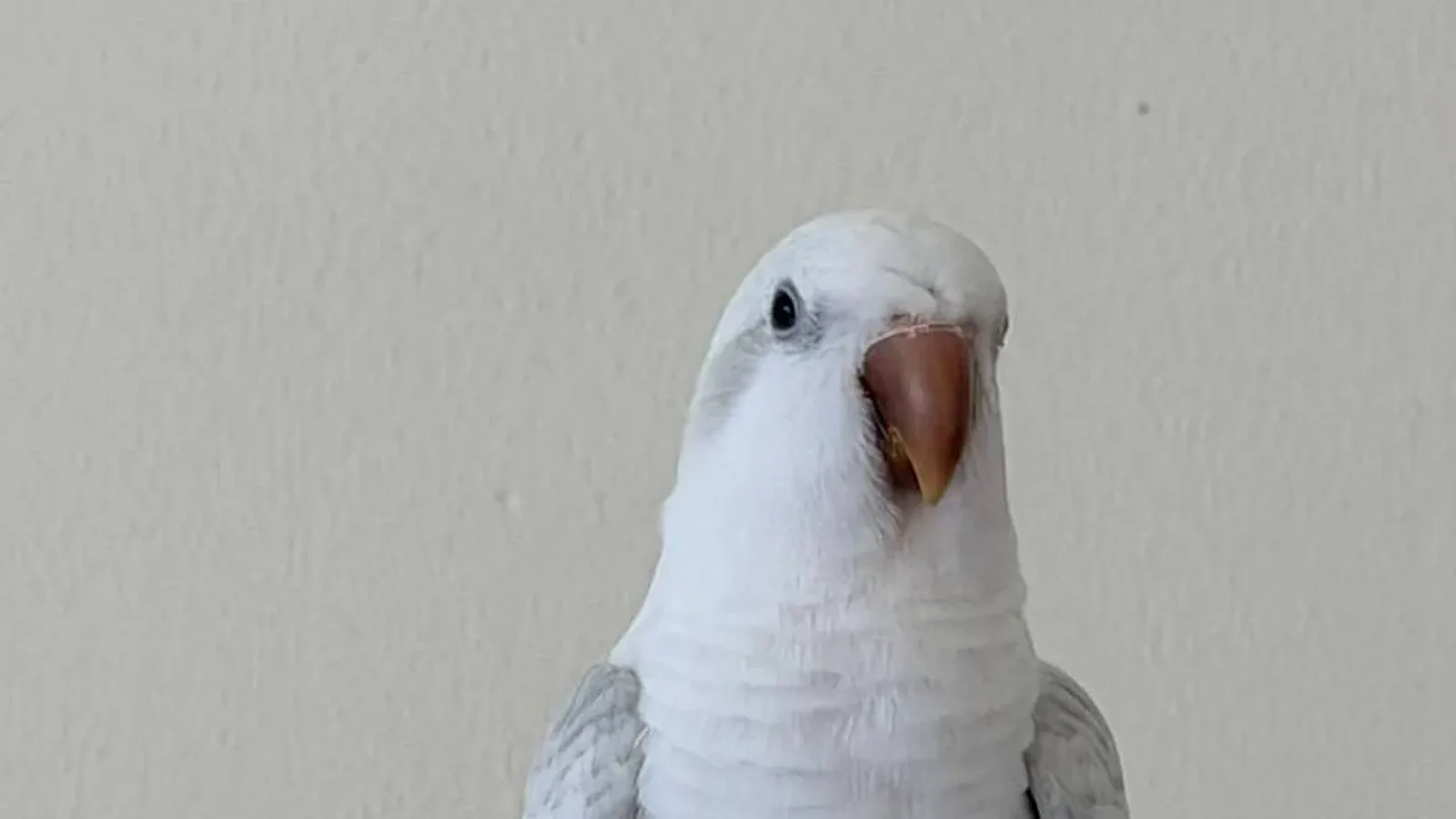
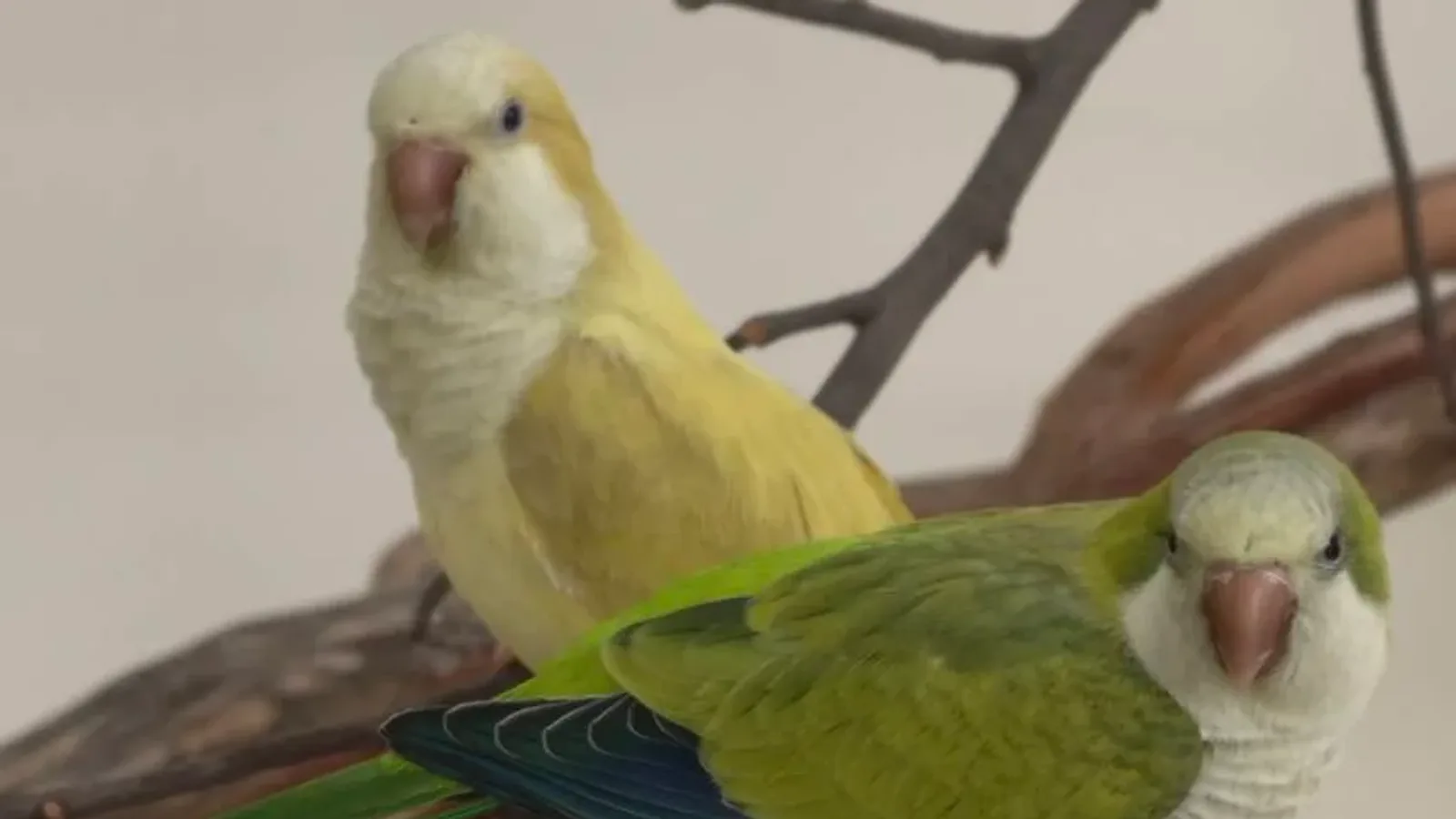
The short answer first. A hand-fed chick in the standard green colour currently sells for 5,000 to 9,000 THB. Blue sits at 15,000 to 25,000 THB. Rarer colours such as Opaline, Turquoise, Lutino and multi-gene combinations climb to 20,000 to 40,000 THB. All prices in this article are Thai market prices in Thai baht, and these are figures I see actually changing hands in Thai bird-keeping communities, not the inflated asking prices some people post to leave room for haggling.
One thing to keep in mind is that monk parakeet prices are not fixed like goods on a shop shelf. They move with the breeding season, with how tame each individual bird is, and with the genetics the parents pass down. Treat the ranges I give here as a broad frame for comparison, not as exact numbers to hold a seller to.
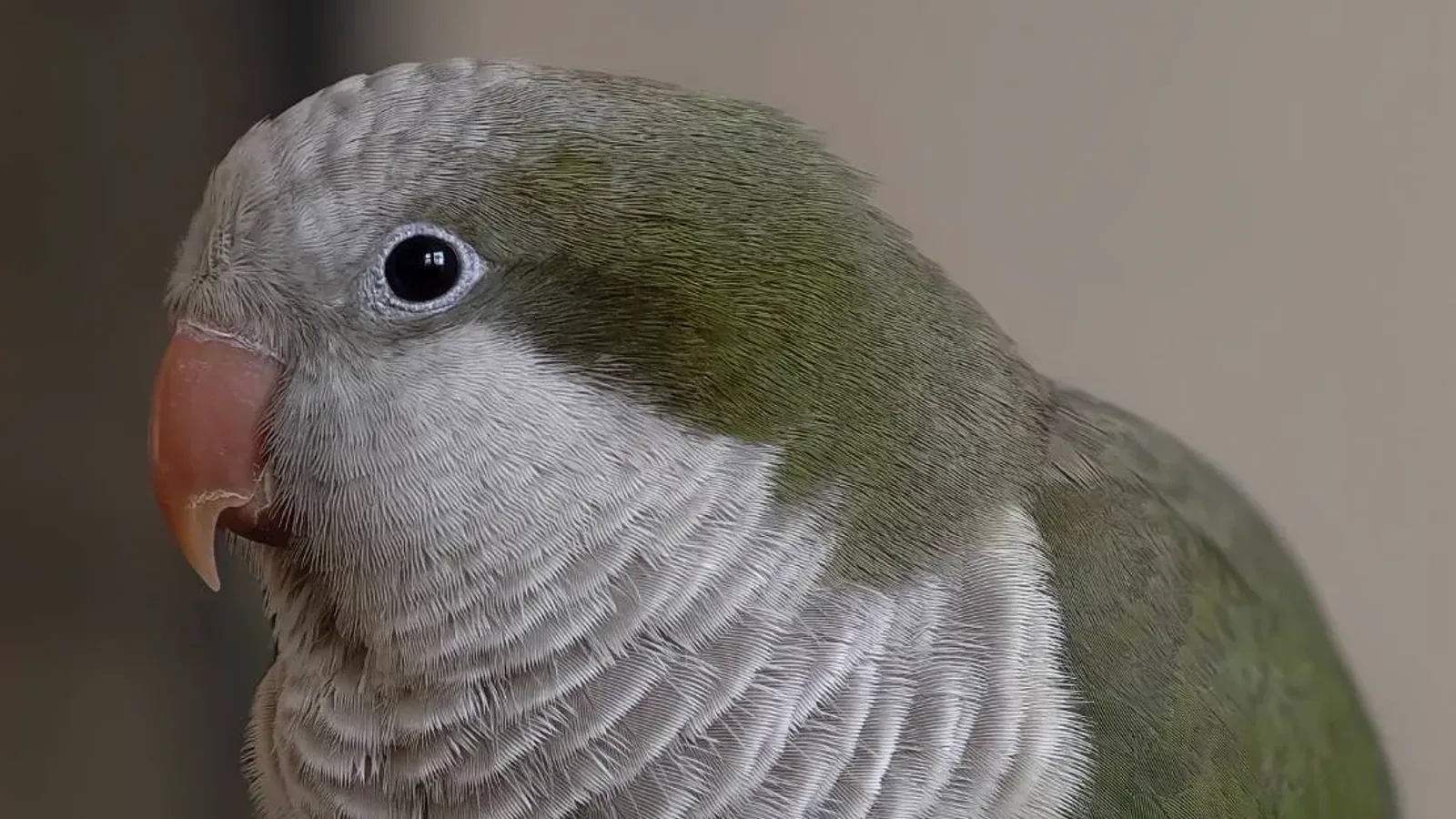
A quick note on names as well. In Thailand this bird goes by several local names, while internationally it is the monk parakeet, and in the United States it is more often called the Quaker parrot. They are all the same species. When you search for prices, try all of these terms. You will get a wider view of the market and a much more accurate comparison.
Monk Parakeet Price Table by Colour
The table below shows hand-fed chick price ranges I have gathered from real sales in Thailand recently, broken down by the colours you are most likely to encounter. Prices are per bird and do not include a cage or equipment.
| Colour | Hand-fed chick price (THB) | Notes |
|---|---|---|
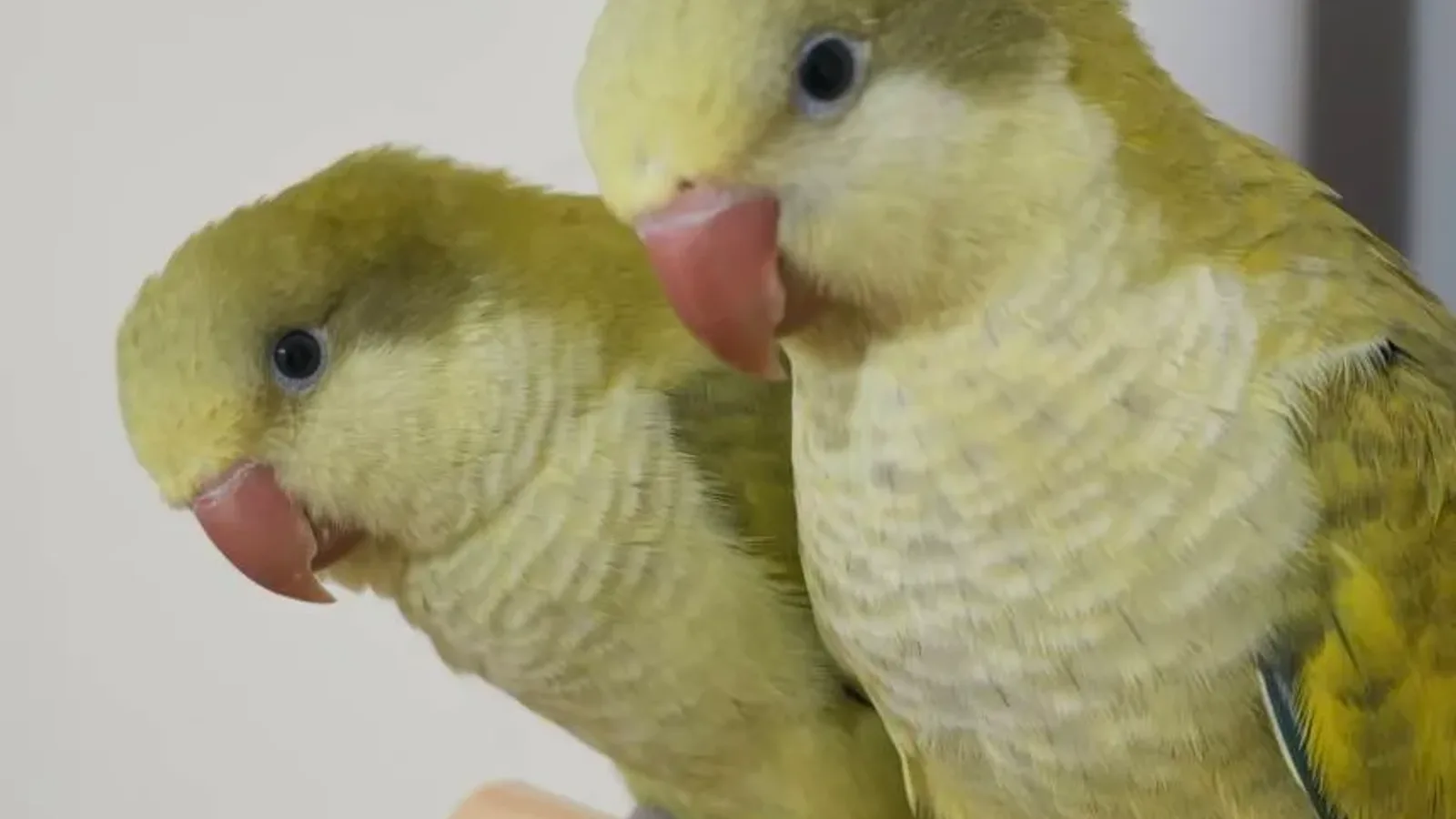
| Standard Green | 5,000 to 9,000 | The original wild colour, easiest to find, ideal for beginners |
| Green split (carrying a hidden colour gene) | 10,000 to 16,000 | Looks identical to standard green but carries a blue or other gene. Price depends on what it is split for |
| Blue | 15,000 to 25,000 | The most requested colour. Price swings noticeably with the season |
| Opaline | 20,000 to 40,000 | Wing and chest markings differ from standard green. Still uncommon in Thailand |
| Turquoise | 20,000 to 40,000 | Blue-green shade. Inspect the bird in person to be sure it is not a blue in a badly lit photo |
| Lutino | 20,000 to 40,000 | Fully yellow with red eyes. Harder to breed than other colours |
| Combinations such as Opaline Blue or Turquoise Opaline | 25,000 to 40,000 and up | Multiple genes in 1 bird. Price depends on how rare the gene pairing is |
If you come across a price far below this table, do not celebrate just yet. Ask how old the bird is, what condition it is in, and how well the seller actually knows that particular bird. On the other hand, a price above the table does not automatically mean you are being cheated. Some birds have special factors behind them, which I will cover in the next section.
Why Monk Parakeet Prices Vary So Much
Prices differ for 4 main reasons: colour, age, tameness, and the genetics of the parents. A more expensive bird is not necessarily a better bird. It simply has something that keepers are willing to pay extra for.
- Colour is the biggest factor. Green is the natural colour, easy to breed and plentiful. Every other colour comes from recessive genes that require the right pairing of parents. Fewer chicks hatch in the desired colour, so they cost more.
- Age changes the price. A chick that still needs hand-feeding sits at one price. Once it eats on its own and is tame, the price usually rises because the seller has invested time and effort. An adult that is not tame, however, drops in price.
- Tameness matters a great deal. A bird that will step up, allows handling and does not bite clearly commands more than a bird that fears people. Taming a nervous bird takes months and does not work on every individual.
- Genetics can raise the price even on a plain green bird. A chick from rare-coloured parents, or one split for a gene that breeders want, costs more because the buyer can use it in a breeding programme.
On top of these 4 factors there is location. Prices in Bangkok and the surrounding provinces tend to run slightly higher than upcountry because demand is stronger, and the cost of transporting a live bird is sometimes built into the price. If you live outside Bangkok, look for a breeder near you first. You may get a better price and you will be able to see the bird in person.

How Hand-fed Chick Prices Compare to Adult Birds
A hand-fed monk parakeet chick costs roughly 1,000 to 3,000 THB less than a weaned, tame bird of the same colour. It costs more than an untamed adult, though, because adults that cannot be handled often sell for less than chicks.
The reason a chick is cheaper than a tame weaned bird is that the buyer takes on the work of hand-feeding 2 to 4 meals a day in the early weeks, keeping the temperature stable, and accepting the risk that the chick falls ill if fed incorrectly. Sellers price a little lower to compensate for this. The upside is that a Quaker parrot you have hand-fed yourself bonds with you far more strongly, and you learn its personality from the very beginning.
For beginners, I recommend taking a chick at around 5 to 7 weeks of age. By then it is almost fully feathered, needs only 2 to 3 feeds a day, and has started pecking at pellets on its own. Younger chicks may be cheaper still, but the chance of losing one rises sharply if you have never hand-fed a bird before.
Price Comparison by Age (Standard Green)
| Age / status | Approximate price (THB) | Best suited to |
|---|---|---|
| Chick at 3 to 4 weeks (3 to 4 feeds a day) | 5,000 to 6,500 | People who have hand-fed birds before |
| Chick at 5 to 7 weeks (2 to 3 feeds a day) | 6,000 to 8,000 | Beginners ready to learn |
| Weaned, tame, will step up | 8,000 to 10,000 | People without time to hand-feed who want a bird ready to interact |
| Adult over 1 year, not tame | 3,500 to 6,000 | People pairing birds for breeding rather than companionship |
Why Blue Monk Parakeets Cost More Than Green
Blue monk parakeets cost more than green because blue is a recessive gene. A chick can only hatch blue when both parents carry the blue gene, so far fewer blue chicks appear each season than green ones, while demand for blue is actually higher.
To put it in practical terms, if you pair a green split blue with another green split blue, only about 1 in 4 chicks will hatch blue on average. The rest will be green, some split for blue and some not, and you cannot tell which is which by looking. Pairing blue with blue gives you all blue chicks, but a single pair of blue parents already costs tens of thousands of baht, so the breeder's outlay is high from the start.
Blue chicks currently sell for 15,000 to 25,000 THB. If you see a blue advertised at 8,000 THB, assume there is a reason: it may be an untamed adult, a bird with health problems, or a photo that does not match the actual bird. A blue priced above 25,000 THB is usually split for another gene, such as split Opaline, which breeders are happy to pay for because they can build on it.
How to Tell if a Monk Parakeet Price Is Reasonable
The simplest method is to compare the price against the tables above and then ask the seller these 5 questions. If they answer all of them clearly, a price slightly above the range is acceptable. If they cannot answer even 1, walk away no matter how cheap the bird is.
- How old is the bird and what date did it hatch? A breeder who raised the chick will answer immediately. A vague reply like "a month or so" is a warning sign.
- What colour are the parents? This tells you what the chick might be split for, and it is the deciding factor in whether any split premium being asked is justified.
- What is it eating now and how many feeds a day? If they call it a hand-fed chick but say it eats pellets on its own, or say it is weaned but still needs feeding, the seller is not watching the bird closely.
- Ask for a live video, not old photos. Check for clear eyes, tight feathers, a clean vent, steady footing, and a response to human voices.
- Do they offer support after handover? A seller confident in their birds is usually happy to keep answering questions, at least through the first few weeks of hand-feeding.
Another technique I use is to compare prices from several sources in the same week. If most of the market is selling blue at 18,000 THB and one seller is asking 12,000 THB, a gap that wide almost always has a reason behind it. It may not be anything sinister, but you need to know what that reason is before you transfer any money.
Signs to walk away immediately: being asked for a deposit before you see a live video, being told a bird is a rare colour but only shown a photo with distorted lighting, or being pressured with claims that someone else is next in line. Monk parakeets are bred all year round in Thailand. There is never a need to decide within a single day.

When Is the Cheapest Time to Buy a Monk Parakeet
Chick prices are usually lowest when many clutches hatch at the same time, because several breeders have chicks to move at once and end up competing with each other. When chicks are scarce in the market, prices jump. The difference can be 1,000 to 3,000 THB for the same colour.
In Thailand monk parakeets breed almost year round, but in my own experience the cooler, less scorching months produce bigger clutches. Once the extreme heat arrives, many pairs take a break and lay fewer eggs, so fewer chicks reach the market and prices creep up. If you are in no hurry, watch prices for 1 to 2 months before deciding and you will see the pattern for yourself.
Do not buy on price alone, though. Peak hatching season is also when some breeders release chicks too early to lighten their feeding load. A chick that is too young is cheap, but it is also very risky. If you are a beginner, paying a little more for a chick that is old enough is far better value.
What Else You Need to Budget for Beyond the Bird
Set aside at least another 3,000 to 7,000 THB for a cage, equipment and the first month of food. The price of the bird is only part of what you actually need. If you buy a green bird at the lower end, the equipment can cost almost as much as the bird itself.
| Item | Approximate price (THB) | Notes |
|---|---|---|
| Cage of at least 45 x 45 x 60 cm | 1,500 to 4,000 | Bigger is better. Bar spacing no wider than 1.5 cm |
| Hand-feeding formula, 1 tin | 300 to 600 | Lasts the whole hand-feeding period for a single chick |
| Feeding syringe or spoon | 50 to 150 | Keep 2 to 3 spares |
| Brooder box and heat lamp | 300 to 800 | Essential if your chick is under 6 weeks old |
| Pellets and seed mix for the first month | 300 to 600 | Start offering them to peck at during the hand-feeding stage |
| Perches, toys, food and water bowls | 300 to 800 | Monk parakeets love to chew, so toys need replacing regularly |
Monthly costs after that are modest. Food and toys together run about 300 to 800 THB a month. Do keep an emergency fund for avian vet visits, though. When a bird falls ill it usually needs treatment quickly, and clinics that treat birds are far fewer than those for cats and dogs.
Final Thoughts Before You Buy a Monk Parakeet
If you ask me what price counts as good value for a monk parakeet, my answer is the price that gets you a healthy bird, at the age the seller claims, from someone who can answer your questions. It is not the lowest number in the group.
For beginners, I recommend starting with a standard green at 6,000 to 8,000 THB, aged 5 to 7 weeks. You get a bird that tames easily and has a high survival rate. If you fall in love with the species, move on to a blue or a rare colour as your second Quaker parrot once you have experience under your belt. Keeping a monk parakeet alive and happy always matters more than whatever colour it happens to be.
Frequently asked questions
Do male and female monk parakeets cost different amounts?
For a pet bird there is almost no difference, because you cannot tell the sex by looking and only a DNA test will confirm it. Prices differ only when a breeder needs a specific sex for pairing, and the DNA test fee of around 300 to 500 THB is usually added to the price.
Does the price include delivery, and can birds be shipped to other provinces?
Most advertised prices exclude delivery. Sending a live bird by coach or pet courier costs around 300 to 800 THB depending on distance. Very young chicks should not travel far. If you live upcountry, choose a chick that is at least 6 weeks old.
How much deposit is normal, and can I pay in instalments?
A typical deposit is around 1,000 to 3,000 THB to reserve a chick that is not yet old enough to go home. Instalments are entirely up to the seller and are not standard in the market. Before paying any deposit, make sure you have seen a live video of that specific chick and have a clear handover date.
Can you tell a green split blue from a plain green by looking?
No. A green split blue looks exactly like a standard green in every way. You can only know from the parents' history or once the bird has produced blue chicks. Any split premium above the standard green price must come with clear information about the parents.
Will monk parakeet prices come down in the future?
Standard green has held fairly steady for years because it is easy to breed. Rare colours tend to fall as more breeders produce them, just as blue was once far more expensive than it is now. If you are buying a pet, there is no reason to wait. If you are buying to breed and sell, allow for the possibility that the colour drops in price within 2 to 3 years.
How much does a breeding pair of monk parakeets cost?
A proven green pair ready to produce usually sells for around 10,000 to 18,000 THB. A blue pair or a pair split for rare colours runs 30,000 to 60,000 THB and up. A pair that has already raised chicks costs more than a newly matched pair because they have proven they are compatible.
If my budget is under 5,000 THB, should I save up or buy an untamed adult?
If you want a bird to interact with and teach to talk, I recommend saving for a hand-fed chick. An untamed adult can take months before it allows handling, and some never tame at all. Cheap adult birds are better suited to people who plan to pair them for breeding.
Based on hands-on breeding and keeping experience, reviewed at every update · Published 8 Sept 2026