Where to Buy a Monk Parakeet: How to Spot a Trustworthy Breeder and Avoid Scams
 Written by the NokMonk team, monk parakeet breeders in ThailandUpdated 12 Sept 2026Read time 14 min
Where to buy a monk parakeet, how to judge a breeder, what to ask before you pay a deposit, and the scam warning signs every first time buyer should know.
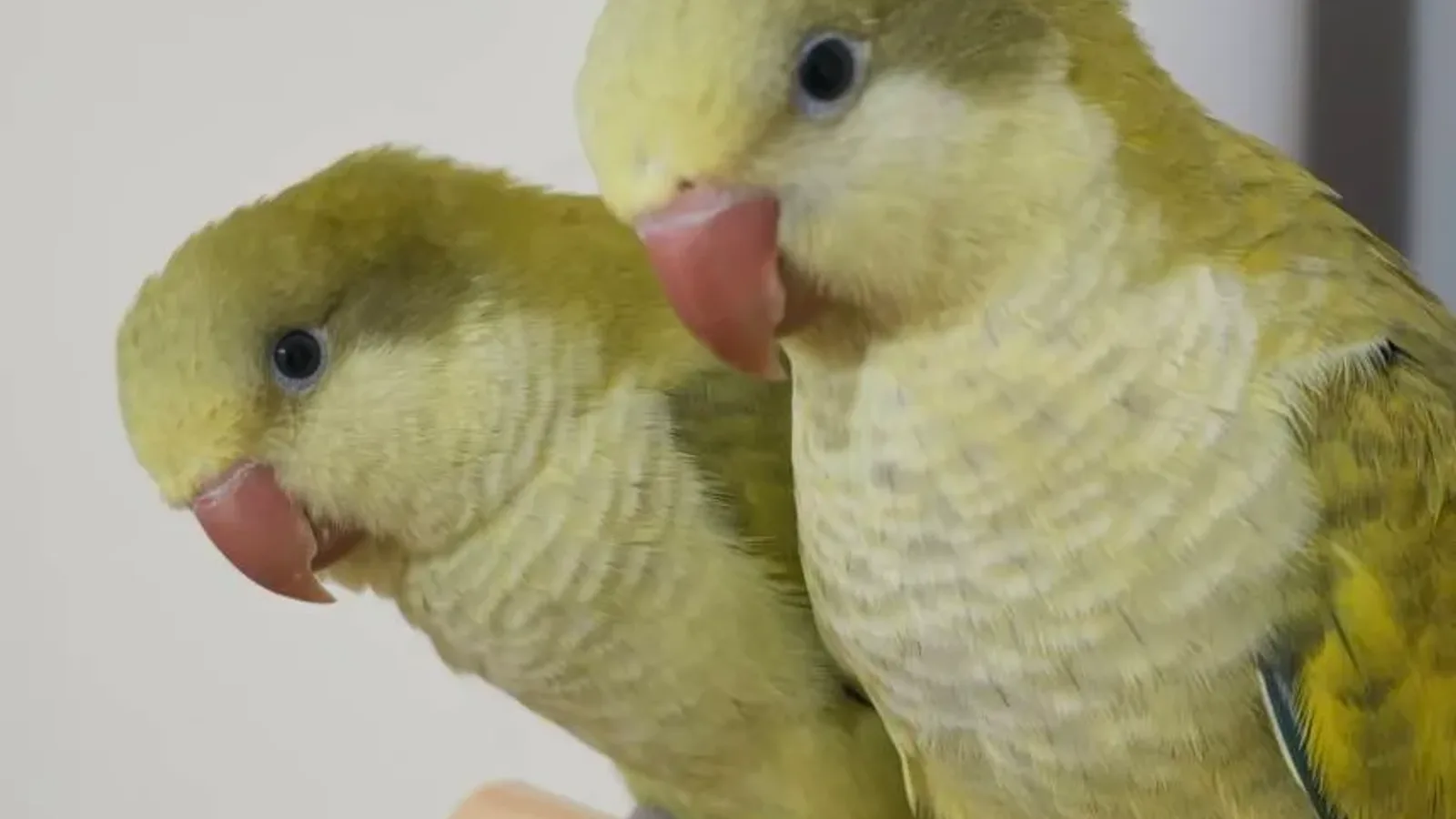
The question I hear most from people who want to start keeping monk parakeets is not about food or cages. It is where to buy one, and how to know you are not being cheated. I have kept and bred monk parakeets, the bird Americans call the Quaker parrot, for many years now. In that time I have watched people bring home lovely birds at fair prices, and I have watched others transfer money and get nothing back but silence.
This article is written for first time buyers. There are no breeder names here and I am not pushing anyone's business. It is simply the way I look at a seller, the questions I ask, and the precautions I use myself and recommend to friends. By the end you will at least know where the traps are, and what you should be getting for the money you are about to spend.
Where to buy a monk parakeet: breeder, bird shop or a hobbyist
If you are new to this, my first recommendation is a breeder or small breeder that will let you come and see the birds in person before you commit. Bird shops and online listings are a second choice that needs a lot more checking. The reason is simple. Someone who bred the chick can answer questions about its parents and history on the spot. Someone who bought it in to resell can usually only repeat what the previous seller told them.
In Thailand right now, sources for monk parakeets fall roughly into 3 groups, each with its own trade offs.
- Breeders and small breeders You get to see the parent birds, you get a full history, and prices usually match the market or sit slightly below it because there is no middleman. The downside is that you may have to wait for a clutch, and some breeders are a long drive away.
- Bird shops Plenty of colours and ages to choose from, and you can take a bird home the same day. But parent history is often vague, and birds from many different breeders sharing one space pass illness around far more easily.
- Hobbyists with the occasional clutch You can sometimes get a very tame bird because it was raised in a home, and there may be room to negotiate. On the other hand, their knowledge of genetics and hand feeding may be thin, so ask detailed questions.
Wherever you buy, there is one rule I never skip. See the actual bird before paying any significant amount. In person or over a video call is fine, but it has to be that bird, live, at that moment. Not an old clip forwarded to you.
What makes a monk parakeet breeder trustworthy
A trustworthy breeder shows 3 main things. They will let you see the parent birds, they can explain the chick's genetics clearly, and they have past customers who come back to post updates on their birds in the page or group. If all 3 are there, your odds of a bad purchase drop sharply, even if the breeder is small and has few followers.
When I visit a breeder, I actually look at the breeding cages before I look at the chick I came for. The cages should not be so crowded that birds are fighting. The floor should be reasonably clean and the water should not be cloudy. The parents must be fully feathered, not birds that have plucked their own chests bare. Feather plucking in monk parakeets has both a hereditary and an environmental component, and it can carry through to the chicks.
Next, ask about the parent pair in detail. A genuine breeder can tell you which pair this chick came from, the colour of the father and the mother, the hatch date, and the age at which hand feeding started. If the answers go round in circles, or the seller says they cannot remember because there are so many chicks, be careful. Breeders who care about their birds always write this down.
The last sign is one many people overlook, and it is simply how the seller handles your questions. Good breeders are often slow to reply because they are busy feeding chicks, but when they do reply the answer is thorough and there is no pressure to decide quickly. Some will even ask you whether you have kept birds before and whether you have time for feeding. That is a very good sign. It means they care more about the bird than about the sale.
Monk parakeet prices right now, and how cheap is too cheap
A hand fed normal green monk parakeet chick currently sells for 5,000 to 9,000 THB, while rare colours and combinations climb to 40,000 THB. These are Thai market prices. If a listing sits at less than half the bottom of this range, your first question should be why it is that cheap.
| Colour / genetics | Approximate hand fed chick price | What to ask on top |
|---|---|---|
| Normal green | 5,000 to 9,000 THB | Age, hatch date, number of feeds per day |
| Green split to blue, or split to another colour | 10,000 to 16,000 THB | Which parent carries the split, and which one is actually that colour |
| Blue | 15,000 to 25,000 THB | Are both parents blue, or is one a split |
| Opaline, Turquoise, Lutino and combinations | 20,000 to 40,000 THB | Has it been sexed, and what is the genetic makeup of each parent |
The ranges are wide because monk parakeet prices move with 3 main factors. The first is season. When several pairs at a breeder fledge chicks at the same time, prices soften. When chicks are scarce, prices rise on their own without anyone inflating them. The second is tameness. A chick that has been handled since it was tiny and already steps onto a hand will naturally cost more than one the parents raised almost to weaning.
The third is genetics, and this is where the most people get cheated. A green bird sold as split to blue looks exactly like a normal green. The price is almost double, and it rests entirely on the seller's word. So if you are paying split money, you need to see which parent is blue, or at the very least confirm that the pair has already produced blue chicks.
As for how cheap is too cheap, my rule of thumb is this. If a blue is offered at 6,000 THB or an Opaline at 9,000 THB, with free delivery thrown in, no real breeder can survive on that. The cost of feeding the parent pair and the hand feeding formula alone would not add up. An abnormally low price usually comes with a bird that does not exist, or a bird with a problem the seller is not telling you about.

What to ask a seller before you pay
Ask about at least 5 things before you transfer anything: age and hatch date, the parent birds, food and feeding schedule, health history, and what happens after handover. These questions are not about catching the seller out. They help you carry on with the right care, and they show you whether the seller actually knows their own birds.
| Question | A good answer | An answer to be wary of |
|---|---|---|
| How old is the chick and when did it hatch? | Gives the hatch date or the age in days straight away | Says "about a month or so", or asks what age you would like |
| What colour are the parents? Can I see a photo or clip? | Sends photos of the parents in the breeding cage and says how many clutches the pair has produced | Sends a pretty bird photo with no breeder context, or says the chick came from somewhere else |
| What are you feeding now, and how many times a day? | Names the formula brand, the mix ratio and the timing of each feed | Says anything will do, it eats easily, nothing to worry about |
| Has it ever been sick or treated for anything? | Answers honestly even if there was an issue, and explains how it was handled | Insists every bird is 100% healthy with no details at all |
| If there is a problem in the first 3 days, how do we handle it? | Clear terms, such as ongoing advice and looking at each case individually | Says once it leaves the breeder, nothing is their responsibility under any circumstances |
Beyond this table, I usually ask 2 more things that filter sellers very well. First, ask them to weigh the bird live on a video call, because weight is a number that is hard to fake. Second, ask whether the bird has been sexed. If it has not, an honest seller will say they do not know the sex. They will not guess from the face or the shape of the head, because you cannot tell a Quaker parrot's sex from the outside.
Common monk parakeet scam warning signs
The clearest sign is an abnormally low price combined with pressure to pay without letting you see the bird live. When those 2 appear together, I suggest walking away immediately without wasting more time talking. Posts about being scammed buying birds online come up in the keeper groups constantly, and almost every case follows the same recognisable pattern.
- Refuses to video call Claims the signal is bad, they are upcountry, or the bird is scared of the camera. Turning on a camera to show a bird takes 1 minute.
- Photos and clips do not match The bird looks beautiful, but the background, cage or lighting is different in every image because they were copied from several different sellers. A reverse image search very often finds the original source.
- Pushes you to book because someone else is waiting Says another buyer is about to pay, and if you do not put down a deposit in 10 minutes you will lose the bird. Real breeders almost never use this tactic, because they know a good bird always sells.
- Bank account name does not match the seller Claims it is a partner's account, a relative's account or the shop account. If the name does not match the person you are talking to and there is no explanation you can verify, do not transfer.
- Brand new page with suspiciously high sales The page was created a few weeks ago, yet it is packed with customer reviews that all read alike. Click through to the reviewers' profiles. If they are all empty accounts, you have your answer.
- Every colour, everything in stock, always ready to ship A real breeder has chicks in rounds. There is no way anyone has hand fed Opaline, blue, Lutino and Turquoise chicks all ready to go in every colour all year round.
- Unconditional free delivery nationwide Shipping a live animal safely is not cheap. Anyone who always throws it in for free usually never intended to ship anything.
There is a subtler version too. The bird is real and it does arrive, but it is not what was described. A normal green sold at a split price, for example, or a sick bird that looks fine in a short clip. For that kind you need the questions from the previous section and a proper check when the bird arrives, not just the outward warning signs.
How to buy a bird online without getting scammed
The method that works best is a live video call before every transfer, a deposit no larger than necessary, and the balance paid only once the bird is in your hands. If a seller will not accept those terms, either they are not confident in their own bird or there was never a bird to send.
- Search the page name and account number first Put the page name, the payee account name and the phone number into the bird keeper groups and the scam alert groups. It takes 5 minutes and saves a lot of grief.
- Ask for a video call with conditions Have the seller write your name and the date on a piece of paper and hold it next to the bird, or say a phrase you choose while filming. This rules out old clips and copied ones.
- Have them weigh the bird and open the wings Check whether the keel bone is sticking out, look under the wings for broken feathers or plucked patches, and check that the nostrils and vent are clean.
- Keep the deposit as small as you can agree on I suggest no more than 1,000 to 2,000 THB, or no more than 20% of the bird's price. If the seller wants full payment before shipping with no good reason, walk away.
- Choose the safest way to receive the bird If you can collect in person, do. If it has to be shipped, agree the date, time and method in writing in the chat, and ask for a photo of the bird in its box before it leaves.
- Keep every piece of evidence Screenshot the listing, the chat, the payment slip and the account number before you transfer, not after something goes wrong.
One more thing I want to stress. Buying a bird online is not bad in itself. I regularly sell chicks to people in other provinces this way. The problem is not the channel, it is skipping the checks out of fear that the bird will slip away. Beautiful monk parakeets come along every season. There is no need to rush and put a large sum of money at risk.

Should you buy a hand feeding chick or a weaned bird
If you have never hand fed a bird before, I recommend buying one that is weaned or close to it, even though it costs a little more than a young chick. The hand feeding period is when chicks die most easily, and it is also the period some sellers use as an excuse, claiming the buyer fed it wrongly.
Most breeders release hand feeding monk parakeet chicks at around 3 to 5 weeks old. They are almost fully feathered but still need 3 to 4 feeds a day. Formula that is too hot will burn the crop. Formula that is too cold digests slowly and sours in the crop. Feed too fast and the chick aspirates. Any of these can happen in a single feed and cannot be undone.
A weaned bird is roughly 8 to 10 weeks or older, eats pellets and fruit on its own, and the feeding risk almost entirely disappears. It may be slightly less tame than a chick you fed yourself, but a Quaker parrot that was handled from a young age will come back to being tame within a few weeks if you spend time with it every day.
Be wary of sellers who push very young chicks, say 2 weeks old with the eyes barely open, claiming the younger the bird the tamer it becomes. In reality a chick that age needs more frequent feeds, is harder to keep at the right temperature, and the seller gets paid sooner while shifting all the risk onto you. If you really want a hand feeding chick, choose one at least 4 weeks old and ask the seller to show you how to feed it in person before you take it home.
What to check in the first 3 days after the bird arrives
For the first 3 days, check 3 things every morning. Is it eating, are the droppings normal, and is it losing weight. If all 3 are fine, most birds settle in and start playing within the first week. If any one of them is off, take photos, contact the seller immediately and get the bird to an avian vet. Do not wait and see.
Weight is the indicator I trust most. Weigh the bird in the morning before the first feed, on the same digital scale every day. An adult monk parakeet weighs around 90 to 120 grams. A chick that has just moved home may drop a little in the first 1 to 2 days from stress, but a continued loss of more than 10% of the first day's weight is abnormal.
For droppings, look at colour and consistency. Normal monk parakeet droppings have a formed dark green to brown part, a white urate part and a small amount of clear liquid. If they are entirely watery, dark yellow or black, or contain undigested seed, act quickly. For a hand feeding chick, also check that the crop is empty before the next feed. If food from the previous feed is still sitting there, do not feed on top of it.
If you already have birds at home, keep the new one in a separate room for at least 30 days, and wash your hands every time you handle the new bird before touching your existing ones. This is a basic rule every breeder follows, and it is exactly what bird shops that mix stock from many sources usually cannot do. That is one reason I recommended buying directly from a breeder at the start of this article.
Finally, if you have read this far and are still wondering where to buy a monk parakeet, my short answer is this. Buy from someone who lets you ask a lot of questions without getting annoyed, lets you see the bird and its parents live, and does not rush you to pay. That person may not have the rarest colours or the lowest price, but they are usually the one you can still message with questions for years after the sale. For a beginner bringing home a first Quaker parrot, that is worth far more than a discount of a few thousand baht.
Frequently asked questions
Can I buy a monk parakeet from a weekend market or bird market?
You can, but accept that you will usually not know the parents or the exact age, and birds from many sellers kept together have a higher chance of passing on infections. If you do buy there, pick a bird with clear eyes, tight feathers and a clean vent, and quarantine it for at least 30 days before putting it near your other birds.
Is there any way to prove a bird is split to blue?
The only real proof is the parents, or waiting for that bird to produce a blue chick of its own. It cannot be seen from the outside at all. So if you are paying a split price, you need to see which parent is blue or confirm the pair has already produced blue chicks.
I paid a deposit and the seller disappeared. What should I do?
Gather the payment slip, the full chat, the payee name and account number, and the listing page straight away. Then report it to the platform where the sale took place and post a warning with your evidence in the bird keeper groups so nobody else gets caught by the same person.
Is it safe to ship a monk parakeet by coach or a pet courier?
Reasonably safe for shorter distances when the weather is not extremely hot. Use a box with ventilation holes and a non slip floor, put in small pieces of fruit instead of water, and have the seller send a photo of the bird in the box before it leaves. If you have the choice, collecting in person is still the safest option.
Should a beginner buy one monk parakeet or a pair?
Start with one. It tames far more easily because the bird bonds with you instead of with another bird. If you want a pair later, look for the second bird once the first has settled in and become tame.
A bird is being sold cheaply because of missing feathers or plucking. Should I buy it?
If you know the cause and can live with it, yes. But understand that plucking in monk parakeets is hard to fix and can come back. Before deciding, ask when the plucking started, whether the parents pluck too, and whether the bird has seen an avian vet.
What do I need to prepare before collection day?
A warm, draught free cage or brooder box, a digital scale, the same food the seller is currently using, and the number of an avian vet near you. Do not change the food during the first week, as that adds stress on top of the move.
Can a seller guarantee the bird?
A full money back guarantee is rare in the bird world, because a live animal also depends on the care it gets after handover. What a good seller can usually offer is ongoing advice and a case by case look at any problem in the first few days. Agree those terms clearly in the chat before you pay.
Based on hands-on breeding and keeping experience, reviewed at every update · Published 8 Sept 2026